
Colombia Demands Humanitarian Conditions for Detainees in Venezuela
The Colombian Government, represented by Vice Minister Mauricio Jaramillo of the Foreign Ministry, has made a formal request to Venezuela to ensure humanitarian conditions for Colombians detained in the country. This appeal arises amid alarming reports of mistreatment, violations of due process, and inadequate communication for those imprisoned in Venezuela.
Diplomatic Tensions and Humanitarian Proposals
The situation has been exacerbated by ongoing diplomatic tensions, particularly after the Venezuelan authorities suspended the anticipated release of numerous Colombian detainees. In response, Colombia has put forward a proposal for a humanitarian guide aimed at guaranteeing consistent communication and verification of detention conditions for its citizens. Vice Minister Jaramillo emphasized the urgency of protecting the rights of Colombians abroad, reinforcing that the Foreign Ministry is in constant contact with affected families.
Rising Concern Over Detainee Rights
Ambassador to Venezuela, Milton Rengifo, also reiterated the Colombian Government’s unwavering commitment to securing respect for the procedural rights of detainees. Reports indicate that arrests of Colombian nationals surged after the 2024 presidential elections, often under accusations of terrorism or conspiracy. As of December 14, at least 20 Colombians remain jailed for political reasons.
Conditions in Venezuelan Prisons
Families of detainees have reported severe conditions such as solitary confinement, overcrowding, and unsanitary living conditions. Reports from relatives and international organizations have highlighted a disturbing pattern of mistreatment. For example, one detainee’s aunt noted that her relative had been out of contact for five months, while others reported limited and monitored communication.
International Response and Recommendations
The United Nations, via High Commissioner Volker Türk, has labeled several detentions as arbitrary, urging Venezuela for the unconditional release of individuals unlawfully detained for their civic activities. These calls have gained momentum as more testimonies of harassment and mistreatment emerge from former inmates.
For instance, Amin Abelino, recently released, shared harrowing experiences of physical abuse and deprivation of basic necessities during his 36-hour confinement. Another former detainee, Pedro Rojas, described being forced to eat under unsanitary conditions, shedding light on the atrocious treatment of prisoners.
Families’ Determination and Government Actions
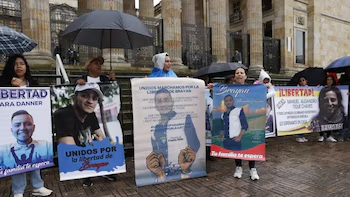
Families of detainees are voicing their desperation through public protests, advocating for the immediate release of their loved ones. The Colombian Government has faced challenges in negotiating these processes, especially following controversial public statements from Foreign Minister Rosa Yolanda Villavicencio regarding potential political transitions in Venezuela, which resulted in a delay of a scheduled release.
In the ongoing struggle, Colombian authorities continue to facilitate contact between detainees and their families while exploring diplomatic avenues to secure the release of those wrongfully imprisoned. Senior consul David Haddad Clavijo noted that around 60 Colombians have been shifted to detention centers close to the border to improve family communication.
Conclusion
The demand for humane treatment of Colombian detainees in Venezuela marks a critical juncture in bilateral relations. As both governments navigate complex diplomatic landscapes, the well-being of detained individuals must remain a priority, underscoring the need for ongoing dialogue and international oversight to restore respect for human rights in the region.