
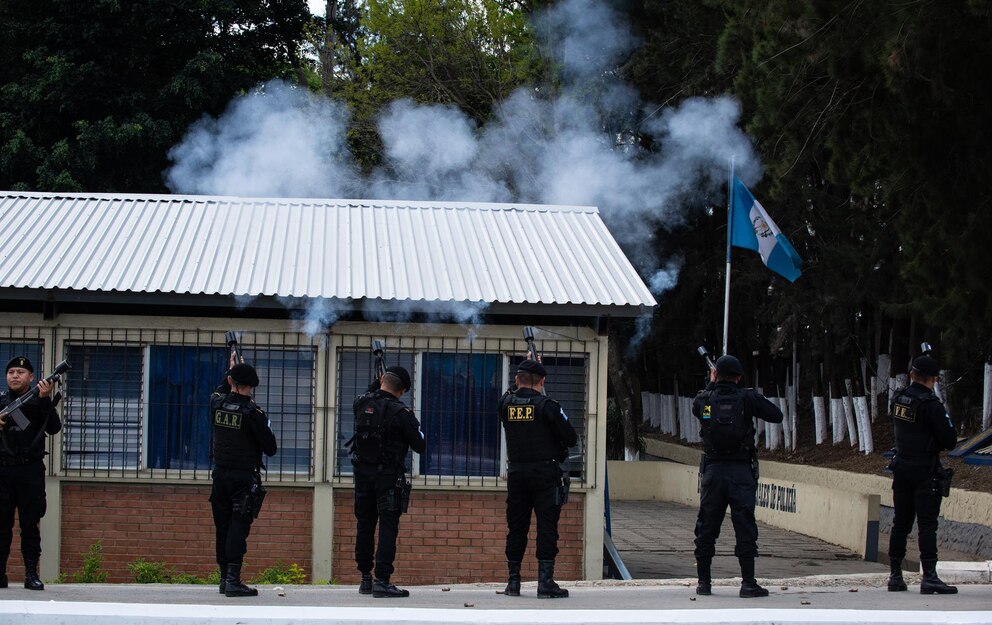
Armed Clashes in Sololá, Guatemala: A Disturbing Turn of Events
Overview of the Violent Escalation
In recent days, the picturesque department of Sololá, Guatemala, has been marred by violence, leading to a tragic loss of at least five lives and injuries to more than ten individuals. The conflict erupted during a period of considerable unrest, particularly affecting the communities of Nahualá and Santa Catarina Ixtahuacán. Reports indicate that armed groups attacked police facilities and detained agents of the National Civil Police (PNC), leading to significant disruptions on the Pan-American Highway.
Catalysts of Violence
According to reports from La Hora, the violent clashes were triggered by the actions of criminal structures characterized by a paramilitary nature. These groups leveraged existing tensions between local communities to solidify their influence and facilitate illicit activities. Their coordinated offensives included not only seizing police stations but also effectively blocking key transportation routes, crippling local economies and mobility.
State Response and Intervention
In response to the escalating violence, the Guatemalan government deployed a specialized operation involving both the PNC and the Army. The primary goal was to restore state authority, rescue kidnapped officers, and reclaim control over areas seized by armed groups. These operations, however, were met with fierce resistance, underscoring the growing complexity of the security situation in Sololá.
Human Cost of the Clashes
The preliminary reports from the conflict highlight the troubling reality that both state forces and local civilians bore the brunt of the violence. Several soldiers were injured during confrontations, and the fatalities included members of the PNC and local residents, making clear the difficulty of isolating innocent civilians from the escalating conflict. This has raised critical questions about the effectiveness of state interventions in volatile situations.
The Role of Misinformation
Compounding the crisis has been the rampant spread of misinformation on social media. The Guatemalan government has urged citizens to refrain from disseminating unverified information, emphasizing that such actions can undermine public trust in state institutions. During times of crisis, the clarity of communication is vital for effective emergency responses.
Historical Context and Future Implications
The clashes in Sololá are not new; they stem from longstanding territorial disputes intertwined with the ambitions of organized crime. The government identifies this intersection of historical grievances and criminal interference as a potent source of instability that complicates efforts for resolution. State authorities have reiterated the need for community cooperation and institutional restoration to prevent further outbreaks of violence.
Conclusion: A Path Forward
The recent events in Sololá present a challenging landscape for the Guatemalan government as they strive to maintain order and restore peace. Continuous efforts to coordinate between the Army and the PNC are essential for preventing criminal groups from exploiting local tensions. However, the profound impact on the community’s day-to-day life underscores the urgent need for comprehensive strategies addressing both immediate violence and underlying issues fueling the unrest.
As Sololá faces a precarious future, the resilience of its communities and the effectiveness of state responses will be critical in navigating this turbulent chapter.