
LIBRE Party’s Rejection of Presidential Election Results
During an extraordinary assembly, the ruling party Libertad y Refundación (LIBRE) has voiced its strong opposition to the recent presidential election results in Honduras. The party argues that the electoral process did not represent genuine competition between alternative governance models. Instead, it perceives the elections as a mechanism aimed at re-establishing a traditional two-party system. LIBRE has accused economic interests, both domestic and international, of unduly influencing the provisional results provided by the National Electoral Council (CNE).
Call for Protests
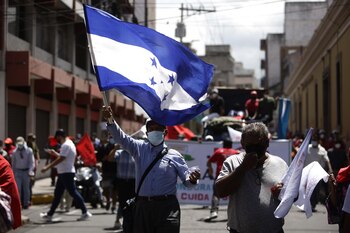
The LIBRE party has called on citizens to take to the streets to demand a transparent recount of the votes. They emphasize that the results lack both political and moral legitimacy. As of now, protests and public mobilizations are gaining momentum across the country, reflecting widespread dissatisfaction. With some 2,773 electoral records under review due to allegations of irregularities, the pressures on the CNE are palpable.
Election Results Disputed
Initial vote counts show candidate Nasry Asfura of the National Party receiving 40.52% of the votes, closely followed by Salvador Nasralla from the Liberal Party with 39.20%. This narrow margin has intensified the scrutiny calls, especially since Honduran electoral laws stipulate that the candidate with the highest percentage automatically assumes the presidency. Understanding this, LIBRE insists on an exhaustive review of the electoral records.
Claims of Foreign Interference
The political crisis is further complicated by accusations of foreign intervention. Outgoing President Xiomara Castro openly criticized the previous U.S. administration, led by Donald Trump, for allegedly undermining Honduran sovereignty. Castro contends that external pressures have distorted the electoral process, contributing to an environment of ideological fear. Such claims have been reinforced by LIBRE’s manifesto, which alleges that an “unprecedented media war” has manipulated public perception in favor of external interests.
The Role of Media
According to various reports, LIBRE contends that local media has participated in this “media war,” amplifying biases that hamper transparency during the elections. The party accuses these outlets of facilitating external interference while fostering social tensions in the country. This has raised serious concerns among civil organizations and opposition parties, who are now demanding a meticulous review of the electoral process.
Continued Unrest and Political Tension
The climate of uncertainty continues to fester, with various civil organizations echoing LIBRE’s calls for transparency. As protests and public demonstrations become more frequent, the influence of LIBRE’s “vote by vote, minute by minute” movement is gaining traction. Citizens from diverse sectors are joining this push for accountability.
Various LIBRE spokespersons have expressed unwavering resistance to any government that stems from what they argue is a flawed electoral process. As the National Electoral Council navigates the review process, the legitimacy of any new government remains in question.
The Future of Honduran Politics
The next steps taken by the CNE and the public’s response to the ongoing audit will undoubtedly shape the course of Honduran politics. With rising tensions and public demand for legitimacy, the ruling party’s commitment to a firm and ethical opposition makes clear that the repercussions of this electoral crisis will resonate throughout the nation for some time. As the political landscape evolves, Hondurans watch closely, poised for the next chapter in their turbulent history.