
Europe’s Quest for Its Own SpaceX
Introduction: The Challenge of Regulation vs. Innovation
In the world of technology, Europe often grapples with a reputation for excessive regulation stifling innovation. While the European Union has made strides, such as standardizing USB-C and launching a universal Airdrop, the continent is notably lagging in the space sector. With China investing heavily and SpaceX setting benchmarks in reusable rocketry, Europe recognizes the urgent need to revitalize its space ambitions.
A Shift in European Space Endeavors
November 2023 marked a pivotal moment for the European Space Agency (ESA) with the announcement of the European Launcher Challenge. This initiative aims to bolster competition among European launch providers, diversify access to space, and, most importantly, enhance Europe’s autonomy in space transportation. The ESA is committing over €900 million to foster this competitive landscape.
Funding the Future of Space
Recent contracts awarded by the ESA, totaling up to €169 million, will be distributed among five pioneering companies, including Spain’s PLD Space. The funding breakdown comes in the wake of a detailed report by the ESA—referred to as Document 100—showing investments totaling €902.16 million into the European space program.
The Need for Self-Sufficiency
For the ESA and Europe to maintain relevance in space, self-sufficiency is essential, especially in light of disruptions like the recent invasion of Ukraine, which cut off access to Russian Soyuz rockets. Furthermore, the retirement of the Ariane 5 in 2023 and the troubled development of the Ariane 6 raise alarms about Europe’s ability to launch critical satellites, such as the Galileo navigation satellites and the Euclid telescope.
Show Me the Money: Major Contributors
A strategic move towards national sovereignty is reflected not only in funding from countries with direct stakes in the program but also from those willing to invest without production plans:
- Germany: €363 million
- France: €179 million
- Spain: €169 million
- United Kingdom: €144 million
- Norway: Investing €29 million directly into the European Launcher Challenge.
This staggering investment will help boost domestic rocket construction sectors, like Spain’s PLD Space development of the MIURA 5 rocket.
The Chosen Ones: Companies Leading the Charge
The ESA has selected five companies to spearhead the funding and development efforts:
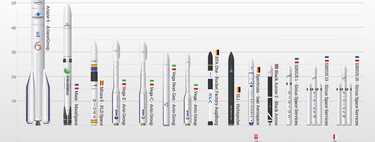
- Isar Aerospace: Focused on the Spectrum rocket for medium payloads.
- Rocket Factory Augsburg: Developing the RFA One launcher, currently in the testing phase.
- MaiaSpace: Innovating reusable vertical landing technology.
- PLC Space: Working on the MIURA 5 and a family of reusable rockets named Miura Next.
- Orbex: Planning launches from Saxavord in the Shetland Islands with their Prime A rocket.
Skepticism Amidst Ambition
Despite these ambitious plans, skepticism remains regarding Europe’s ability to cultivate a reusable rocket industry. The disparity in regulatory environments compared to the U.S. model—where companies like SpaceX thrive—is a significant hurdle. While the American model encourages major investments down a more relaxed regulatory path, Europe’s supervisory approach may hinder rapid progress.
Conclusion: A New Horizon for European Space
Recent shifts towards private investment indicate a burgeoning industry within Europe, aiming to reclaim its sovereignty in space access. With these five companies developing innovative systems, the ESA hopes to witness significant advancements by 2027, preparing for missions into the next decade. The outcome of this ambitious initiative could redefine Europe’s standing in the global space arena.