
Japan’s Shifting Ceremonies: From Children to Dogs
The Rise of Pet Blessings
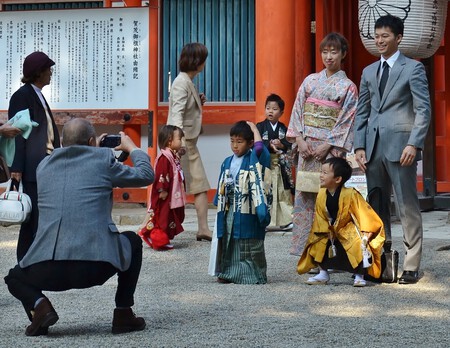
In recent years, Japan has witnessed an intriguing cultural shift. Once known for its deep-rooted family traditions celebrating children’s milestones, the country has begun to adapt these customs to include pets, particularly dogs. Miki Toguchi recently took her miniature schnauzer, Kotora, to the famed Ichigaya Kamegaoka Temple in Tokyo to partake in the Shichi-Go-San ceremony—a ritual traditionally reserved for children aged three, five, and seven. Interestingly, the attendees at this blessing were now predominantly four-legged, as Kotora and his canine companions eclipsed the number of human participants.
A New Interpretation of Shichi-Go-San
The Shichi-Go-San ceremony, dating back to the Heian period, originally celebrated a child’s survival to critical ages amid high mortality rates. Families used to gather at shrines to express gratitude and seek blessings for their children’s health and well-being. Today, this ancient tradition is evolving to accommodate the needs of a society where dogs outnumber children—especially in urban areas. Recent reports indicate that the Tokyo temple welcomes approximately seven times more pets than human children each fall, with 350 animals attending compared to just 50 kids.
Changing Societal Values
This shift can largely be attributed to Japan’s declining birthrate, which hit a record low in 2024 with only 686,061 births compared to a staggering 1.6 million deaths. The demographic crisis is driving families to embrace pets as companions, with dogs and cats providing an emotional connection that many find increasingly fulfilling. As owner Miki Toguchi put it, “People have gone from having children to having pets.” This sentiment is echoed by several families, highlighting a broader trend where pets assume familial roles traditionally held by children.
Adapting to New Realities
Priests like Kenji Kaji from Ichigaya Kamegaoka Temple recognize the need to adapt practices to remain relevant. While the inclusion of pets might seem unconventional, it offers a path forward for temples facing dwindling attendance from young families. The financial implications are not insignificant, as today’s ceremonies often carry a fee of about 5,000 yen ($32), providing a new revenue stream for what some refer to as “obsolete shrines.”
Cultural Significance of Pets
Blessing pets in traditional ceremonies does more than provide a new revenue option; it reinforces cultural ties and traditions within a changing societal framework. With dozens of temples now offering pet-focused ceremonies, these blessings symbolize a blend of ancient customs with modern life, highlighting the evolving priorities of Japanese households.
Conclusion: A Reflection of Modern Japan
As Japan grapples with its demographic crisis, the adaptation of the Shichi-Go-San ceremony to include pets emphasizes not only a significant cultural change but also a delicate balance between honoring tradition and embracing modern realities. The merging of children’s rituals with the blessings of pets is symptomatic of a society navigating through profound demographic challenges while still seeking connection, joy, and community in the love of their furry friends.