
China finds itself in a precarious position within the competitive landscape of artificial intelligence (AI) technology. Major Chinese tech firms, particularly Alibaba and ByteDance, are eager to gain access to the highly sought-after NVIDIA H200 chip. However, unlike previous instances where the U.S. government dictated terms, it is now Beijing that holds the key to unlocking these technological advancements. As the U.S. loosens export restrictions under set conditions, the ultimate decision on chip acquisition rests with Chinese regulators, who have been tightening their grip on foreign semiconductor imports.
Two Giants with Enormous Needs
Alibaba and ByteDance are not just typical tech companies; they represent two of the largest players in the Chinese market with massive requirements for computational power. Alibaba runs extensive e-commerce platforms like Taobao, Tmall, and AliExpress, facilitating a significant proportion of transactions both domestically and internationally. Meanwhile, ByteDance operates globally recognized apps such as TikTok and its Chinese counterpart Douyin, along with Doubao, its AI chatbot. The immense computing needs of these platforms highlight the critical nature of hardware upgrades, which can significantly impact their operational efficiency and competitive edge.
The Shift in Washington’s Stance
The dynamics shifted dramatically on December 8, when President Donald Trump announced that the U.S. would resume exports of the H200 chip to “approved customers” in China. This marked a significant departure from previous restrictions, introducing a framework where the U.S. government would receive 25% of the revenue from these sales—a notable increase from the 15% on the H20 model. The White House framed this decision as a strategy to boost domestic manufacturing and create high-skilled jobs while retaining control over chip distribution to China.
Placing the H200 within NVIDIA’s Portfolio
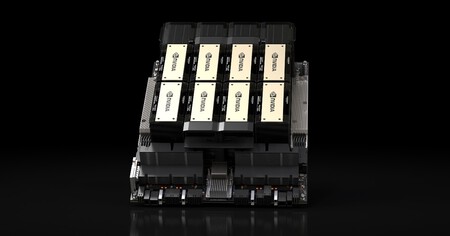
The H200 chip is part of the Hopper architecture launched in 2022, positioned between the older H20 models and NVIDIA’s new Blackwell line. While the Blackwell-based servers promise drastic performance enhancements, the H200 remains a vital asset for entities requiring advanced training capabilities, especially in markets where newer technologies are constrained by export limitations. This makes it a pivotal resource for companies like Alibaba and ByteDance as they strive to innovate.
NVIDIA H200
Why the H200 is a Game Changer
The performance disparity between the H200 and its predecessor, the H20, is striking. According to the Institute for Progress, the H200 achieves an impressive throughput of 15,840 TPP, nearly six times that of the H20, which hits only 2,368 TPP. Even when compared to advanced domestic alternatives, like the Huawei Ascend 910C, which reaches 12,032 TPP, the H200 stands out with its 4.8 TB/s memory bandwidth. This combination of power and speed makes it invaluable for training large-scale AI models.
A Test of Regulatory Fortitude
Both Alibaba and ByteDance have signaled to NVIDIA their intent to acquire substantial quantities of the H200, pending approval from Beijing, as reported by several sources. The current manufacturing landscape is pressured, with a notable portion of production capacity allocated for the upcoming chip generations. This urgency prompts both companies to gauge the likelihood of obtaining regulatory approval to integrate such powerful processors into their systems.
Conditional Access and National Strategy
Acquisition of the H200 is not dictated solely by company demand; it is intricately linked to China’s broader self-sufficiency ambitions in semiconductor technology. Regulators are anticipated to require detailed justifications for each purchase order. The Chinese government seeks to bolster domestic production capabilities through companies like Huawei and Cambricon, scrutinizing imports of advanced technologies based on strategic goals.
The resulting landscape reflects an inversion of traditional market rules: while newer chips like the A100 and H100 face stringent export controls, the H200—a more advanced option—might enter China under specialized circumstances. This imbalance challenges China’s most ambitious technological projects, which rely on obtaining competitive hardware to flourish. Ultimately, the fate of these acquisitions hinges on upcoming decisions from Beijing, which will significantly impact the trajectory of AI development in China.
Images | NVIDIA | Arthur Wang |