
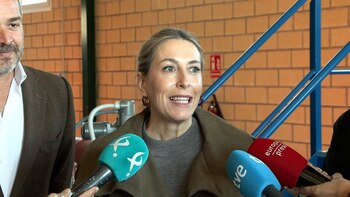
Guardiola’s Warning Against Regression in Equality
Regional president María Guardiola has voiced serious concerns regarding the potential regression in equality, housing, and access to essential services in Extremadura. With changes in the regional parliamentary balance on the horizon, she emphasized that social policies could be directly impacted by the outcomes of upcoming elections. This scenario is particularly troubling for various vulnerable groups, as she highlighted in a recent address in Puebla de la Calzada.
The Link Between Political Dynamics and Social Policies
Guardiola underscored the crucial connection between the political landscape and social policies, linking sustainability and support for initiatives such as teleworking, housing for young families, and resources for people with disabilities to the political configuration of the Assembly. She expressed apprehensions about prospective setbacks in rights tied to equality and regional cohesion if opposing political majorities assume power.
Empowering Women and Underrepresented Groups
One of Guardiola’s focal points was the representation of women in leadership roles. She firmly advocates for maintaining spaces where women can lead and thrive to ensure equal opportunities and continued social advancements. She articulated that exclusionary discourses threaten these strides, particularly in achieving gender parity in decision-making positions.
Territorial Cohesion Law as a Tool for Equality
According to Guardiola, the Territorial Cohesion Law is vital for providing educational, health, and cultural services across all municipalities in Extremadura, regardless of size or population density. By addressing historical inequalities and demographic challenges, such measures aim to promote inclusivity and counteract issues like youth emigration.
Political Critiques of Machismo
Politically, Guardiola distinguished between national parties and those with a stronger regional focus, suggesting that the former often struggle to grasp the unique challenges of smaller towns. She openly criticized Santiago Abascal, the national leader of Vox, for his apparent machismo and opposition to women in power, as evidenced by his controversial remarks. Guardiola argued that such attitudes undermine equality and representation.
Addressing Rural Development and Housing Challenges
Guardiola announced initiatives to revitalize rural areas, including direct financial incentives of up to 10,000 euros for remote workers settling in Extremadura. In addition, plans for the construction of over 3,000 residences aimed at young people, single-parent households, and families are slated to improve housing accessibility, essential for countering urban exodus.
Educational and Health Reforms
Additionally, Guardiola highlighted the need for educational adaptations in rural schools due to enrollment fluctuations and demographic dispersal. The intent is to safeguard the right to education for all children in the region, regardless of their rural residency. Furthermore, she addressed the modernization of rural health services to ensure adequate care and retain populations in these areas.
The Importance of Voting in Upcoming Elections
In summarizing her address, Guardiola reiterated the risks associated with potential parliamentary reconfigurations. Cuts to public services, loss of social rights, and worsened exclusion could ensue from an unfavorable political shift. She stressed the need for voters to understand the implications of their choices to safeguard essential social programs and rights.
In conclusion, María Guardiola’s declarations present a strong call to action for the citizens of Extremadura to prioritize equality and representation as the region navigates significant political transitions. Ensuring that women and traditionally marginalized groups remain visible in leadership roles is deemed critical for the overall welfare and development of the community.