
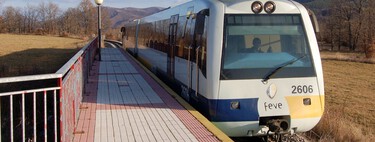
For eight days, Cáceres and Badajoz have been united by train, marking a significant milestone in Extremadura’s transportation landscape. Since December 1, 2025, the two largest cities in the region are connected by a modern train service that takes merely 50 minutes. With four daily frequencies, this connection greatly simplifies the lives of countless Extremadurans. The government anticipates that by mid-2026, trains will reach speeds of up to 300 km/h, bringing us closer to the long-awaited Madrid-Lisbon connection.
The Journey Toward High-Speed Rail
This anticipated high-speed rail connection has been the subject of discussions for over 20 years—the dream of linking Madrid to Lisbon in a feasible amount of time. According to current plans, the journey between these two capitals could take just over 180 minutes by 2034, a stark contrast to the nearly five-hour trek it requires today.
Reflection on Past Promises
To appreciate the progress made, one must consider the protracted history behind these projects. The initial promise to connect Cáceres and Badajoz was made in 2003, with a target date of 2010 for completion—the benchmark that remains elusive. As of now, the only high-speed segment in operation is the stretch from Badajoz to Cáceres, extending only to the Monfragüe station.
Comparing Then and Now
In the annals of train travel in Spain, significant comparisons can be drawn from historical schedules. Recent browsing through the Renfe guide from 1970 revealed that the journey from Madrid to Palazuelo-Empalme (modern Monfragüe station) took approximately 181 minutes. Today, despite the advancements, the journey still takes under two hours and 40 minutes—which is just 20 minutes faster than it was over five decades ago!
The Comfort of Train Travel
For many, traveling by train is not just about speed; it’s about comfort. The ease of rail compared to road journeys is undeniable, although frequent delays and breakdowns on buses have shifted preferences over the years. Many travelers, including myself, have made the choice for trains based on comfort, despite the relative slowness as we still remember the past journeys.
The Road Ahead
To conclude, the long-term vision has sections defined: Plasencia-Cáceres-Mérida-Badajoz, Talayuela-Plasencia, and Madrid-Oropesa. While construction on the Talayuela-Plasencia segment is in early stages, projected timelines indicate an operational segment by 2028. However, the Madrid-Oropesa section, crucial for connecting the capital with Extremadura and beyond, is still mired in planning complications.
This comprehensive analysis reveals an undeniable truth: the ambitious goal of achieving a high-speed connection that significantly shortens travel time between Madrid and Badajoz is still a work in progress. With nearly six decades of delays and an investment of 3.8 billion euros in the current phase alone, one can only hope that future promises are kept to avert a painful reminder of how stagnant some aspects of our infrastructure have been since 1970.