
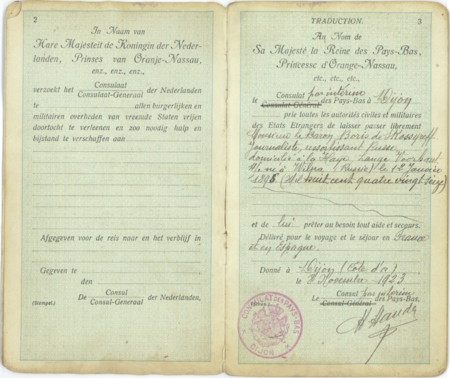
Boris Skossyreff, a man whose remarkable life spanned nearly a century, was a quintessential figure in the realm of swindlers and spies. He passed away in 1989 at the age of 93 in a nursing home in Boppard, formerly part of West Germany. Although he lived long, the myriad lives he led are what truly stand out. Born into an affluent family in Vilnius, the Bolshevik Revolution quickly uprooted his existence, forcing him into various roles as a swindler, spy, forger, gigolo, translator, and even a self-proclaimed king of Andorra.
Skossyreff’s Colorful Existence
Life for Boris was not just about survival; it was about thriving in adversity. His existence was filled with escapades, including becoming a triple spy for Germany, Britain, and the U.S. He navigated through concentration camps and gulags while collaborating with the Nazis, always in pursuit of self-preservation.
Life and Background
Boris’s life commenced with privilege and wealth. Born in 1896 in Vilnius, then part of the Russian Empire, the Bolshevik Revolution shattered any illusion of a serene life. He fled to find solace in England, where he enlisted in the Royal Navy while indulging in criminal activities.
A polyglot, Skossyreff mastered multiple languages—including Russian, English, French, German, and Spanish. He maintained such meticulous attention to his appearance that he was known to wear a monocle even in dire situations such as prison camps. His charisma and linguistic skills helped him secure a Nansen passport, enabling him to traverse Europe with relative ease.
The Journey to Andorra
After a series of misadventures through various European nations, including Spain and the Netherlands, Skossyreff landed in Mallorca. His turbulent lifestyle attracted the attention of affluent women, one being Marie Louise Parat, whom he eventually married. However, his illicit lifestyle forced him to relocate yet again.
Boris I of Andorra
Skossyreff’s audacious scheme to proclaim himself “Boris I, Sovereign of Andorra” marks a high point in his saga. He attempted to establish an aristocratic lineage to persuade the Andorran people to break away from their rulers and modernize their governance, much like Monaco. His charm and confidence earned him media attention, including coverage from The New York Times, making him a sensational figure in Europe in 1934.
However, this self-declared reign was short-lived—lasting a mere nine days. The local bishop and authorities quickly curtailed his aspirations, resulting in his arrest.
Survival Through Adversity
Despite this setback, Skossyreff managed to adapt to the tumultuous times of the 20th century. He faced the Spanish Civil War, ended up in a Republican refugee camp, and was later imprisoned in a Dachau concentration camp during World War II. Post-war, he found himself in Siberia, sentenced to forced labor for over two decades.
Throughout these trials, he used his charm to survive, often manipulating women for financial support and leveraging his linguistic skills while standing out even in the darkest times.
Final Years and Legacy
In the 1950s, Skossyreff returned to Germany, marrying again but living the later years of his life in relative obscurity. He died in a nursing home in 1989, far removed from the charismatic hustler he once was, and was marred by allegations of misconduct.
Today, Boris Skossyreff stands as a remarkable figure whose audacious actions inspire both documentaries and books, illustrating how a man like him could maneuver through the complexities of his era.
Images | Wikipedia and Aboodi Vesakaran (Unsplash)