
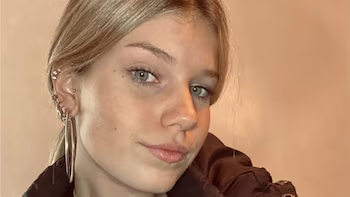
Felicitas Alvite: La Toretto’s Request to Work as a Nanny
Legal Context and Background
Felicitas Alvite, known as “La Toretto” from La Plata, has become a controversial figure due to her involvement in a tragic incident resulting in the death of motorcyclist Walter Armand. Accused of causing this fatal accident by running a red light, Alvite has been under house arrest since May while awaiting trial. Recent developments reveal that she has sought legal permission to work as a nanny during her house arrest, raising questions about her circumstances and the judicial process.
Request for Employment
Alvite’s legal team, led by Flavio Gliemmo, has filed a request with the Oral Criminal Court No. 2 for permission to work as a nanny twice a week. This job entails caring for the child of a well-known couple. According to Gliemmo, this temporary arrangement is intended to help Alvite contribute to her household expenses while also allowing her to save for her upcoming studies, which are planned to be conducted virtually.
Implications of the Request
The request is not without its controversies. While it seems reasonable for a young adult under house arrest to seek some form of income, critics have argued that Alvite’s situation complicates matters given her pending trial for serious charges, including simple homicide with possible intent, which carries a potential prison sentence of 8 to 25 years.
Prosecutor and Victim’s Family Response
Before a decision can be made, the prosecutor, Martin Raul Chiorazzi, and representatives of the complainant must weigh in on the request. Their feedback is crucial, although it is not binding for the judges. The family of the deceased motorcyclist has already expressed discomfort over the idea of Alvite accessing employment opportunities during this turbulent time.
Ongoing Judicial Proceedings
The trial for Alvite has not yet begun, with the next preliminary hearing scheduled for February 18, 2026. According to legal procedures outlined by the Buenos Aires Criminal Procedure Code, multiple hearings have been held wherein parties involved presented their theories and collected evidence. Judge Silvia Hoerr will review the case details, including the seemingly extensive witness list consisting of at least one hundred prepared statements.
The Bigger Picture
The case touches on broader societal notions of justice and accountability, particularly in instances where influential figures—like influencers and public personalities—find themselves embroiled in serious legal matters. Alvite’s situation is further complicated by her active presence on social media during her house arrest, where she continues to engage with her audience, raising ethical questions about the appropriateness of her online activities under such circumstances.
Conclusion
As Felicitas Alvite awaits the Court’s decision regarding her plea to work as a nanny, the case continues to evoke mixed responses from the public and individuals affected by her actions. The upcoming judicial decisions could set important precedents for how similar cases are handled in the future, not only in terms of legality but also from a societal perspective on accountability and justice.