
YASA and the Revolution of Electric Motors
Developing an engine, founding a startup, and being acquired by a prestigious company like Mercedes is a dream come true for many engineers. This is precisely what happened to YASA, a British manufacturer founded in 2009 by members of the University of Oxford. Their ambition? To innovate the world of electric vehicles with axial flux electric motors.
The Game-Changing Axial Flux Electric Motor
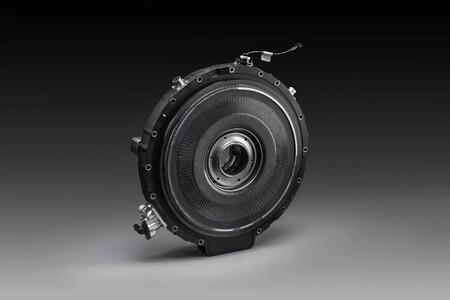
Unlike traditional radial engines, where the magnetic field extends from the center outwards, axial flux motors operate with components arranged in flat, disc-like formations. This design allows for a more compact and lighter engine without compromising power. As a result, these motors have the potential to revolutionize electric vehicles, particularly in terms of space efficiency.
Benefits of Axial Flux Motors
One of the most significant advantages of axial flux motors is their reduced size and weight. YASA has developed a latest-generation engine that delivers a remarkable 1,000 HP while weighing only 12.7 kg. Achieving an astonishing power density of 59 kW/kg, this innovation positions YASA at the forefront of electric motor technology.
The 1,000 HP Prototype: A Milestone in Electric Vehicles
Recently, Mercedes-Benz announced a prototype of this axial engine, capable of delivering a peak power of 750 kW. With continuous power output ranging from 350-400 kW (approximately 530 HP), YASA’s creation sets a new standard for electric motors in high-performance cars.
Technological Innovations Driving Performance
Improvements in design and thermal dissipation have been critical to achieving this level of performance. With no reliance on “exotic materials,” YASA’s focus on efficiency enhances both the motor’s consistency and longevity. As Tim Woolmer, CEO and founder of YASA, asserts, this engine will significantly alter the landscape of the high-performance automotive industry.
Applications in Performance Vehicles
YASA’s engines are already a reality in several high-performance vehicles. For instance, the Ferrari SF90 Stradale employs three YASA engines that cumulatively provide 217 HP, supporting the thermal V8 for a total of 987 HP. Other notable mentions include the Koenigsegg Regera and Lamborghini Revuelto, with each utilizing multiple YASA engines to enhance performance.
The Path to Everyday Electric Vehicles
While currently focused on high-performance applications, the innovations developed by YASA hold promise for everyday electric vehicles. Their scalable designs offer a favorable weight-to-power ratio, making them attractive for mass production in utility vehicles.
The Challenges Ahead
Despite the enthusiasm for axial flux motors, the transition from traditional radial engines poses significant challenges. Current manufacturing platforms are optimized for radial motor production, and adapting to accommodate axial designs would require considerable investment. For high-performance vehicles, this transformation is underway, but for everyday electric cars, it remains a distant goal.
In conclusion, while axial flux technology is poised to change the electric vehicle landscape, its widespread application in everyday cars may take time. As YASA continues to innovate, the automotive industry eagerly awaits the day when these revolutionary motors become a standard fixture in vehicles on our roads.
Images | YASA