
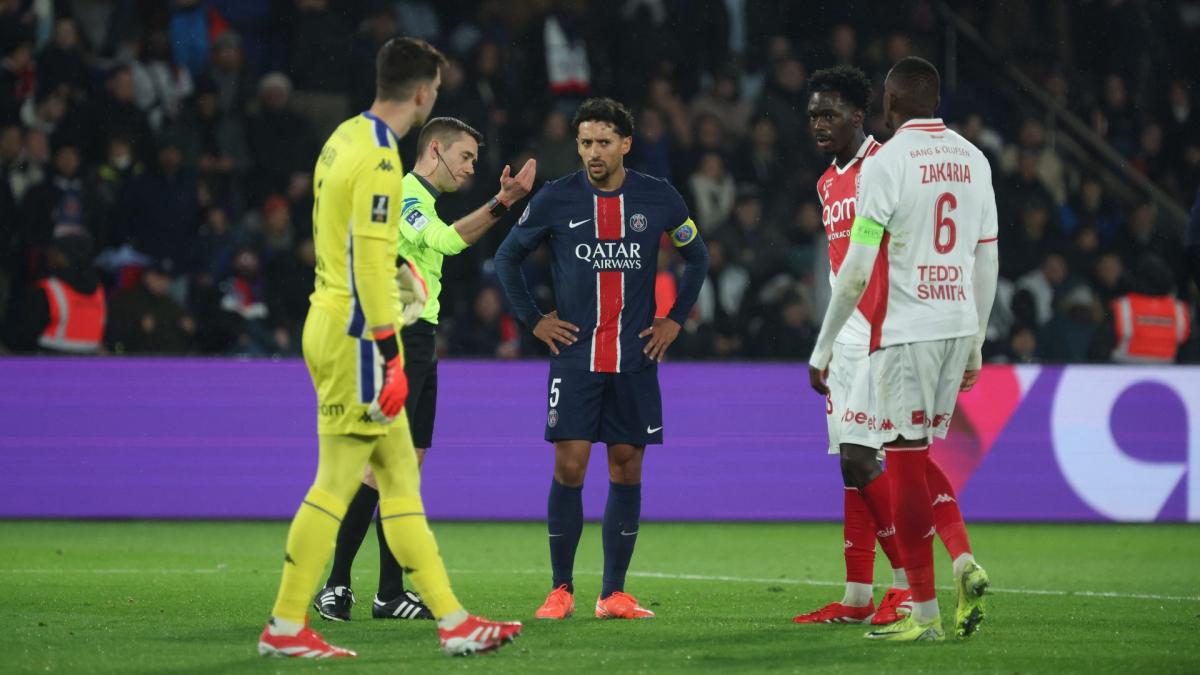
## The Controversial Tackle: Clément Turpin’s Mistake
In a recent Ligue 1 match between Monaco and PSG, the spotlight fell on referee Clément Turpin regarding a pivotal decision he made involving Lamine Camara’s tackle on goalkeeper Lucas Chevalier. During the 12th minute, Camara’s tackle raised eyebrows and ultimately led to significant scrutiny of officiating standards within the league.
### The Technical Refereeing Department’s Admission
Following the match, the Technical Refereeing Department issued a statement acknowledging Turpin’s error in not issuing a red card to Camara. Describing the challenges of managing such high-stakes situations, the statement emphasized the severity of the tackle:
> “The thrown tackle is carried out without control, with speed and intensity, and occurs later than when the goalkeeper plays the ball. The attacker, while making his tackle, directly hits the goalkeeper’s right foot, clearly endangering the latter’s physical integrity.”
#### Understanding Law 12
According to Law 12 of the FIFA Laws of the Game, actions deemed as “serious foul play” warrant severe disciplinary measures, such as expulsion from the game. The Technical Refereeing Department clarified that Turpin’s failure to enforce this rule constituted a gross error, underscoring the need for a reassessment of game-related decisions through video technology.
### The Role of VAR in the Match
In examining the match further, it’s essential to consider the role of the Video Assistant Referee (VAR). Jérémie Pignard, who served as the VAR for this encounter, initially assessed Camara’s foul as minor. His comments during the review highlighted a disconnect in judgment that ultimately affected the match’s outcome:
> “The impact is low, it’s just the twist, we’ll see what that gives.”
Pignard’s communication with Turpin reflected an underestimation of the tackle’s severity, leading to an affirmation of the original decision. However, the recognition of their misjudgment by the Technical Refereeing Department raises concerns about the efficacy and reliability of the VAR system.
### The Aftermath: Implications for All Parties
The ramifications of this tackle are significant for multiple stakeholders. Not only does it put Turpin’s officiating under scrutiny, but it also highlights the inconsistencies within the VAR framework that were meant to enhance the integrity of the game. Camara’s successful continuation in the match, ultimately leading to a 1-0 victory for AS Monaco, adds to the complexity surrounding the decision.
#### Future Considerations
The discourse surrounding this incident emphasizes the urgent need for clear guidelines and comprehensive training for officials within the VAR system. Ensuring that referees and video officials are on the same page can prevent such discrepancies in the future and restore faith in the officiating process.
### Conclusion
In conclusion, the incident involving Clément Turpin, Lamine Camara, and Lucas Chevalier raises critical questions about officiating standards in professional football. As fans and analysts alike dissect the events of this match, the lessons learned could pave the way for necessary improvements in both on-field refereeing and the VAR system. Fans will undoubtedly continue to demand accountability as the league works to refine its approaches to fair play.