
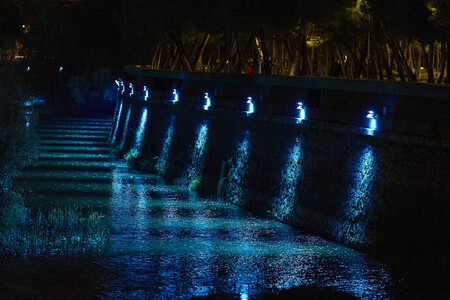
The Manzanares River Lights: A Tourist Attraction or a Threat to Ecosystem?
In December, the festive lights overtaking urban landscapes in Spain are commonplace. However, the recent installation of 61 LED projectors along the Manzanares River in Madrid has sparked significant debate among residents and environmentalists. Their concerns are largely about the environmental impact of what is being dubbed as “light pollution.”
Environmental Concerns
The Madrid City Council has initiated lighting projects purportedly to enhance the riverbank’s attractiveness and increase safety. While they frame this as a triumph for local beautification, critics argue that the project could have adverse effects on the river’s ecosystem. The installation spans a 560-meter stretch near Dam 6, primarily affecting biodiversity in the vicinity.
Environmental advocates highlight that this approach contradicts past efforts to renaturize the river, which focused on ecological recovery and enhancement of biodiversity. “You cannot subject the fauna of Manzanares to an eternal day,” warns biologist Erika González. Such criticism underscores the belief that these lights could disrupt the natural behaviors of not only birds but also vital insect populations.
The City Council’s Justification
From the perspective of the City Hall, the lighting initiative serves multiple functions. They claim it will make the area more appealing and secure for both residents and tourists. José Luis Martínez-Almeida’s team has referred to the project as “sustainable and respectful” of the environment, arguing that the lights are strategically placed to minimize light emission into the sky.
The City Council has labeled this as a “pilot project,” suggesting the lights will remain in operation beyond the Christmas season, serving as a cornerstone for local tourism.
Community Pushback
Despite official claims of safety and aesthetic improvement, many locals feel otherwise. Activists from Ecologists in Action and the Corridor Verde-Imperial Neighborhood Association contend that this is an unnecessary encroachment onto the river’s natural state. Susana de la Higuera from the neighborhood association expressed skepticism, stating, “There is no insecurity problem and if there were, lights should be installed on the street, not in the riverbed.”
Furthermore, the decision faced courtroom challenges, with critics seeking to halt the light’s activation due to unresolved legal concerns. Although the lights have been turned on, resistance from community members remains palpable.
The Broader Implications
The conflict over the Manzanares lights reflects a larger dilemma faced by cities balancing development with environmental preservation. The initiative presents a duality: while it aims to attract tourists and beautify the area, it risks negating years of ecological restoration efforts.
In essence, the questions surrounding the Manzanares lighting installation are as much about urban growth as they are about environmental sustainability. Will Madrid prioritize tourist attractions over the health of its ecosystems? Only time will tell how this balance will be navigated.