
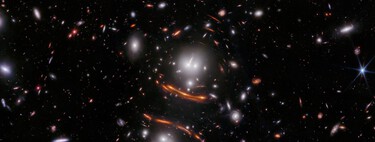
The Age-Defying Supermassive Black Hole: GHZ2
Since the James Webb Space Telescope (JWST) opened its infrared eyes to the universe, it has rapidly transformed our understanding of the cosmos. Its latest revelation is the discovery of the oldest supermassive black hole ever detected, which sheds new light on the origins of our universe. This unique celestial body is located in the galaxy GHZ2 and dates back to just 350 million years after the Big Bang. This timing challenges previous theories, which suggested there wasn’t enough time for such a massive black hole to form.
Unveiling GHZ2: The Discovery
The galaxy GHZ2/GLASS-z12 is at the heart of this groundbreaking discovery. Observations collected by JWST, coupled with data from the ALMA radio observatory in Chile, have confirmed its status as the most distant structure identified to date.
A significant aspect of GHZ2 that has raised questions among astrophysicists is not just its extreme distance but also its composition. Intense emissions of ionized carbon were detected, which require substantial energy to occur. While this suggests a presence of younger, massive stars, the current observations hint at a more dynamic scenario: an Active Galactic Nucleus driven by a supermassive black hole rapidly consuming matter.
The Time Dilemma: Revising Theories
The research on GHZ2 suggests that this black hole has a staggering mass compared to its host galaxy. In the local universe, the ratio of a black hole’s mass to its galaxy’s stellar mass averages around 0.1%. However, in GHZ2, this ratio could potentially soar to 5%. This startling difference endangers existing formation theories, which can be categorized into two primary schools of thought:
- Light Seeds: These theories propose that black holes emerge from the remnants of the first stars and grow incrementally. However, 350 million years is too short a time frame for such growth.
- Heavy Seeds: This viewpoint proposes that these black holes formed from massive clouds of primordial gas collapsing without engaging in star formation.
The findings on GHZ2 lean towards supporting the “heavy seeds” theory or suggest episodes of super-Eddington feeding, where the black hole consumes material at rates exceeding those theoretically permitted by radiation pressure.
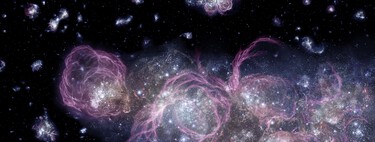
The Cosmic Significance
If confirmed, GHZ2 would shatter existing records, being the earliest known active supermassive black hole. The previous record-holder, UHZ1, existed about 470 million years after the Big Bang. Thus, GHZ2 propels us more than a century back in cosmic time, edging closer to our universe’s inception.
This discovery underscores a dynamic and tumultuous early universe, characterized by rapid evolutions of galaxies and black holes. As we redefine our understanding of cosmic growth, GHZ2 serves as a reminder that the universe is far from static and that its beginnings were significantly more chaotic than we once assumed.
Images | BoliviaIntelligent
In Xataka | Bad news, the Universe has entered its dying phase. Good news, we won’t be here to see it.