
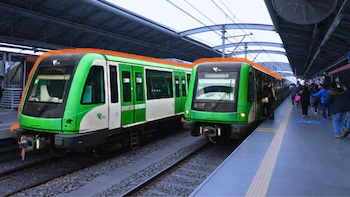
Fare Increase Announcement: What to Expect
The Ministry of Transport and Communications (TCM) has declared an impending fare increase for Line 1 of the Lima Metro, stirring concerns among daily commuters in Peru’s capital. While the specifics of the rate change have yet to be officially confirmed, the announcement has already sparked discussions about the financial sustainability of this crucial urban transport service.
Understanding the Current Situation
As of now, Line 1 serves approximately 600,000 passengers daily, a number set to grow with the anticipated integrations with Line 2 and the Metropolitan transit system. Passenger traffic on Line 1 is increasing at an annual rate of 11%, which has led to a “saturated” operating environment. Riders experience long waits and overcrowded trains, increasing pressure on the TCM to explore infrastructure enhancements.
Long-term Solutions and Innovations
At the recent “III Smart Cities Forum: Metros and Commuter Trains for Lima,” TCM official Jorge Salas Ojeda highlighted the necessity for infrastructure and equipment investments. Discussion points included implementing technical solutions aimed at easing congestion and promoting safe travel conditions. Innovations like security doors on platforms and digital refill systems for travel cards were proposed to enhance passenger experience and minimize risks associated with overcapacity.
Financial Sustainability Challenges
During the forum, it was noted that maintaining and expanding the metro network remains a daunting challenge, particularly due to a constrained public budget. This fiscal reality has prompted the consideration of adjustments to the current fare structure. Salas emphasized that any rate modification would be “reasonable” and rooted in thorough technical and budgetary evaluations to ensure public expenditure is appropriately financed.
Current Ticket Pricing and Future Outlook
At present, a ticket for the Lima Metro costs S/ 1.50, which is lower than alternative transport options such as the Metropolitan (S/ 3.50) and complementary corridors (S/ 2.50). Although no specific date or magnitude for the ticket price increase has been disclosed, the TCM is conducting studies and evaluations led by ProInversion, an entity responsible for transport sector investments.
Conclusions on the Fare Increase
While the community awaits clear information about the forthcoming fare adjustments, it’s essential to appreciate the complex balance between operational capacity, safety, and budgetary constraints. As the Lima Metro moves towards an increasingly interconnected future, stakeholders are keenly aware that any changes to the fare system should ultimately facilitate a more effective and efficient transport experience for all users.