
The Importance of Communication in Modern Warfare
Communications have become the invisible thread that sustains any modern military operation. Troops, vehicles, or missiles are no longer enough; without a stable and resilient network, operational challenges may arise. During the Ukrainian war, Starlink demonstrated its capability to maintain connectivity for Ukrainian forces under intense pressure, sparking debates about its role in military contexts, particularly in regions like Taiwan.
The Unique Architecture of Starlink
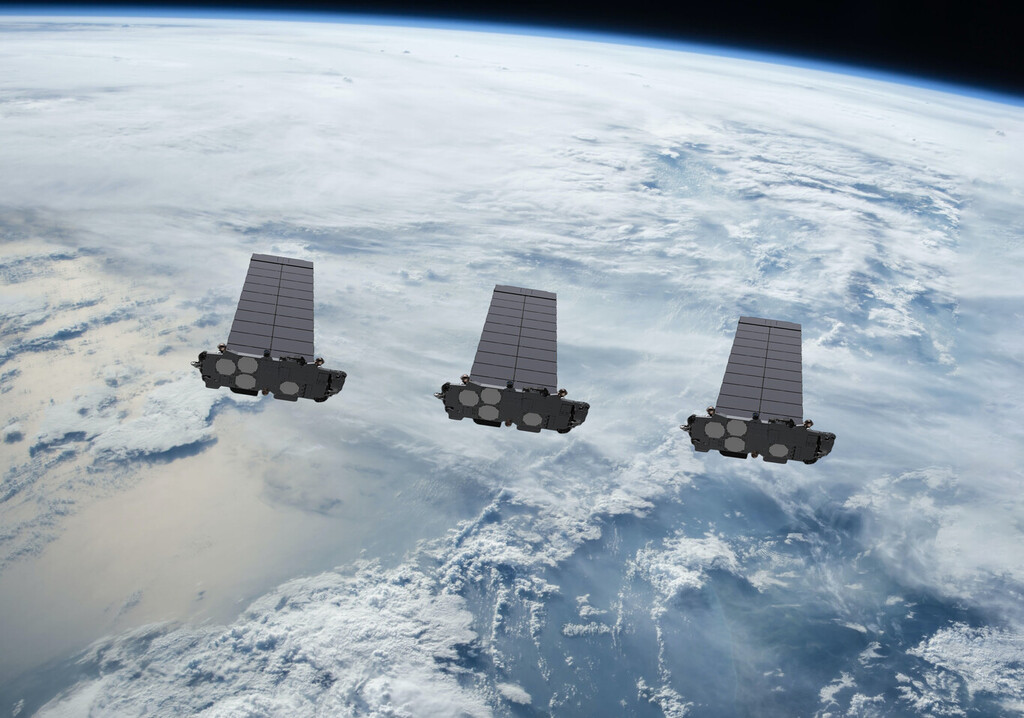
Starlink is not just a typical satellite network. Unlike systems that depend on a few high-altitude satellites in fixed positions, Starlink comprises thousands of small satellites orbiting the Earth at varying altitudes and dynamic routes. This architecture allows ground terminals to connect to multiple satellites in seconds, creating a flexible mesh that is notably difficult to disrupt. This dynamic behavior significantly contributes to discussions surrounding electronic warfare.
Laboratory Experiments and Findings
The intriguing study titled “Simulation research of distributed jammers against mega-constellation downlink communication transmissions” was conducted by researchers from Zhejiang University and the Beijing Institute of Technology. Released on November 5, the study serves as an academic exploration rather than an operational proposal from the Chinese military, offering insights into the potential for interference with a network like Starlink on a regional scale rather than outlining strategic military objectives.
How Starlink Mitigates Interference
This study delves into how Starlink’s architecture is designed to avoid interference. The terminals do not merely switch satellites; they instantly redirect traffic to other visible satellites if a hostile signal is detected. In addition, the network adapts its channel and frequency in real-time, utilizing highly directional antennas that focus signals towards specific points, thereby minimizing interference impacts. Even if a connection is temporarily blocked, the network can promptly restore communication through alternative angles or frequencies.
Simulation Parameters and Scope
The researchers simulated how the Starlink signal would behave over twelve hours, utilizing actual data regarding Starlink’s orbital positioning. They established a virtual network of jammers operating at 20 kilometers high and spaced between five to nine kilometers apart to form a checkerboard pattern. This network could hypothetically be implemented using drones or balloons. Each jammer node, with a power of 26 dBW and narrow beam antennas, could control an area averaging 38.5 square kilometers. To sufficiently cover the territory of Taiwan, at least 935 units would be needed, considering various factors such as geographical barriers and potential failures.
Limitations and Acknowledgments
The authors assert that their findings are merely approximations. They lack real data on terminal radiation patterns or measured signal suppression coefficients, which constrains the simulation’s accuracy. Additionally, they do not have comprehensive knowledge of Starlink’s internal adaptations against coordinated interference. Nonetheless, they believe this initial model provides valuable estimates of the efforts required for blocking strategies in real scenarios.
In conclusion, the study opens a pathway for further exploration into the complexities of electronic warfare involving sophisticated satellite networks like Starlink, emphasizing the challenges of military interventions in the digital age.
Images | starlink
In Xataka | Starlink satellites have transformed war: China and Russia work on “Starlink Killers” to deactivate them