
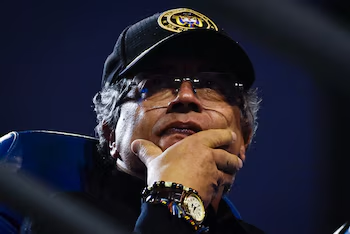
Petro Denies Allegations of Manipulated Audios Tied to Dissidents
President Gustavo Petro is at the center of a political maelstrom, vigorously denying allegations that suggest connections between high-ranking government officials and the dissidents led by alias Calarcá. The controversy erupted when audios and documents were released, prompting him to assert on social media that the claims are “false.”
Petro’s Response to Allegations
In a statement made on November 26, 2025, Petro emphasized the delay in delivering the information, criticizing it as being presented to the press long after the events purportedly occurred. He stated, “They waited 16 months to deliver it to the press,” adding, “I never knew” of such links.
Echoing Petro’s sentiments, former minister Alejandro Gaviria, now an opponent, countered with caustic commentary, implying that the president’s claims are unconvincing, stating, “First the CIA, then he didn’t know.”
Doubts Over the Evidence Presented
Petro’s commentary intensified as he claimed that the voices identified in the leaked audios do not belong to key figures like Wilmar. His claims suggest that the messages and chats referenced in the journalistic investigation were fabrications. He urged patience, stating, “You better be patient and we’ll see where the Caracol journalist’s source was going.”
In his rebuttal, Petro highlighted that previous reports he accessed, allegedly via U.S. officials, about General Juan Miguel Huertas and Wilmar Mejía were also inaccurate. This casts further doubt on the credibility of the investigation that linked state officials to dissident activity.
Criticism from Political Rivals
Petro’s assertions have drawn heavy backlash from political opponents. Representative Jennifer Pedraza outlined the severity of these allegations, accusing the president of minimizing significant concerns about national security. She stated, “You cannot come out with this stream of drool in the face of the most serious complaint from your Government,” suggesting that the situation reflects historical issues of government ties to armed groups.
The Role of Intelligence Reports
Petro has called into question the reliance on foreign intelligence, particularly the CIA, in forming narratives around national security incidents. He conveyed that previously accepted reports from the CIA have led to “serious errors,” raising concerns about their credibility. He suggested a coordinated strategy by international networks to sway public opinion with unreliable intelligence.
Linking a failed military operation to these purported manipulations, Petro argued that domestic forces, specifically police helicopters rather than the military, had informed the dissidents. He posited that even the CIA could be misled in this complex web of intelligence and counterintelligence.
Conclusion: Implications for Political Discourse
This evolving political saga places a spotlight on the complex relationship between government authorities and armed dissidents in Colombia. The allegations and subsequent rebuttals signify a critical juncture in national politics, prompting questions about accountability and the validity of intelligence reports in shaping public perception.
The discussions continue to reverberate within the political landscape, highlighting a historical legacy of corruption and manipulation, thereby remaining a significant point of contention as Petro’s administration navigates these tumultuous claims.