
Subsidies, Forced Labor, and Intellectual Property Violations: US Objections to Argentina’s Trade with China
The Challenge of Chinese Domination in Global Markets
The recent report by the US Congressional Economic and Security Review Commission highlights the growing dominance of China in international markets, particularly in Argentina. It asserts that as China increases its market shares, it not only undermines foreign competitors but also propels them into a cycle of deindustrialization. Such actions are deemed detrimental, prompting US officials to voice their concerns regarding China’s practices, which include significant subsidies, intellectual property violations, and the troubling prevalence of forced labor.
Key Elements of the US Response
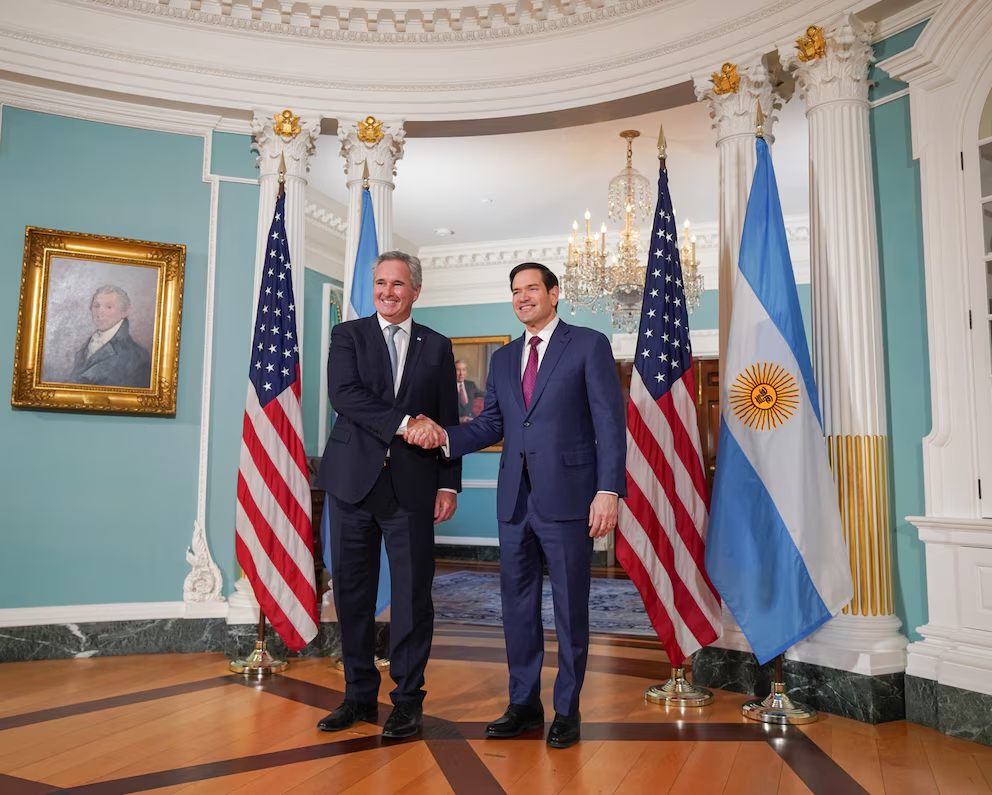
The White House’s recent “framework agreement” with Argentina presents several commitments aimed at curbing China’s aggressive trade practices. Notably, the agreement emphasizes compliance with the World Trade Organization’s (WTO) commitments, especially regarding fisheries subsidies. It also aims to tackle the distortions caused by state-owned enterprises and industrial subsidies that negatively impact bilateral trade relations.
Furthermore, the agreement advocates for the facilitation of investments in critical minerals and prohibits the importation of goods produced through forced labor. These points underscore the US’s broader efforts to compete with China in vital sectors within the Argentine market.
The Economic Impact of Chinese Practices
Julio Sevares, an economist with the Argentine Council for International Relations, notes that China accounts for 30% of global manufacturing, dominating sectors such as steel and electric vehicles. This massive manufacturing capacity allows China to flood markets with subsidized products, which can severely damage local industries and expand the dependence of emerging markets like Argentina.
The Congressional report illustrates a significant rise in the percentage of subsidized Chinese entities operating at a loss. In just ten years, that number is expected to rise from about 12% to nearly 23%. These practices have led to increased trade surpluses for China, exacerbating the trade deficit that Argentina faces with the Asian giant, which reached USD 7.2 billion this year.
The Dark Side: Forced Labor and Intellectual Property Violations
The US report also raises critical concerns regarding the use of forced labor, notably linked to the fishing industry. NGOs funded by US entities have documented predatory behaviors of China’s fishing fleet, which is often subsidized and uses questionable labor practices.
Additionally, violations of intellectual property laws have come to light. Platforms like Shein and Temu, which have gained traction in Argentina, are accused of infringing upon copyrights and trademarks. Reports indicate that these platforms not only offer low-cost goods that threaten local businesses but also engage in practices that violate US laws against forced labor, particularly related to cotton sourced from Xinjiang.
Legislative Implications and Future Concerns
As the US intensifies its scrutiny of trade practices stemming from China, emerging markets like Argentina will face increased pressure to conform to new regulations that prioritize fair practices. The issue of “De minimis” packages, which have allowed low-cost imports to evade tariffs and control, is particularly contentious.
With these developments, Argentinian manufacturers, particularly small and medium enterprises (SMEs), may struggle to compete against the unfair advantages presented by Chinese platforms. The recent discussion among Argentine legislators around potential regulations to protect local businesses indicates that this issue will remain a focal point in future trade negotiations.
Conclusion
As the global landscape shifts, the interplay between trade agreements, labor practices, and intellectual property rights will shape the economic future of nations. The US’s objections to Argentina’s trade dealings with China not only underscore the impact of Chinese economic practices but also pave the way for critical discussions on sustainability and fair competition in international trade.