
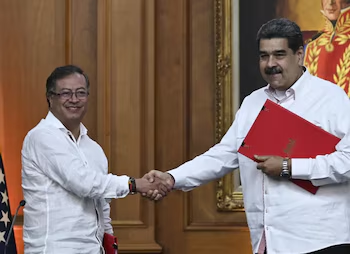
Gustavo Petro Breaks Away from Nicolás Maduro Amid Rising Tensions
A Shift in Political Stance
On November 23, Colombian President Gustavo Petro made a bold statement declaring that he does not support Nicolás Maduro’s regime in Venezuela. This marks a notable shift in Petro’s political rhetoric, as he has previously been seen as a sympathetic figure toward Maduro. During his address, Petro emphasized the need for a peaceful resolution to the ongoing crisis in Venezuela, asserting that military intervention should be off the table.
The Economic Underpinnings of the Conflict
Petro described the international tensions, particularly those between Venezuela and the United States, as largely driven by economic interests. He pointed out that control over oil resources is central to these conflicts, potentially reshaping both Venezuelan and Colombian economies. The Colombian leader highlighted the dangers posed by U.S. intentions to intervene, noting, “I do not support Maduro, I want a political and peaceful solution in Venezuela, but I do not support an invasion.”
International Reactions and Implications
Petro’s statements come shortly after U.S. Treasury Secretary Scott Bessent referred to the geopolitical crises in Venezuela, Russia, and Ukraine. Speculations arose that these events could lead to a significant drop in oil prices, further complicating the situation for Colombian energy firms like Ecopetrol. Petro expressed concerns over the implications of U.S. actions on his country’s economy, suggesting that an invasion would spell disaster not just for Venezuela but for Colombia’s economic stability as well.
Targeting U.S. Policies
In his remarks, Petro took aim at the Trump administration, criticizing the potential military actions being planned against Venezuela. He argued that such interventions would not only jeopardize Venezuelan sovereignty but would also risk damaging Colombia’s own energy landscape. Petro warned that military aggression could lead to economic ramifications, including the potential bankruptcy of Ecopetrol and significant hardship for Venezuelans living near Colombia.
The Future of Colombian Policy
As tensions escalate, Petro’s stance reflects a deeper understanding of the complexities surrounding U.S.-Latin American relations and how these dynamics directly affect Colombia. He has warned those who support military interventions, stating that such actions would lead to the detriment of both nations. “Those who applaud the invasion unleash the bankruptcy of Ecopetrol and millions of Venezuelan brothers in our territory,” he concluded, underscoring the social and economic consequences of potential conflicts.
Conclusion: A Call for Peace
Gustavo Petro’s recent declarations set the stage for a new era in Colombia’s foreign policy, emphasizing dialogue over conflict. By openly rejecting support for Maduro while simultaneously warning against U.S. military intervention, Petro aims to position Colombia as a proponent of peace in the region. It remains to be seen how this will influence relations not only with Venezuela but also with the United States as geopolitical tensions continue to rise.