
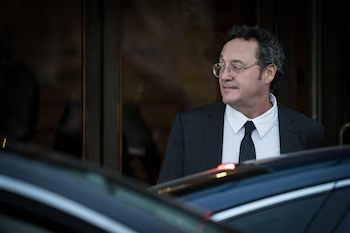
Attorney General’s Absence Affects Monarchy Celebration
The absence of Álvaro García Ortiz, the State Attorney General, from the fiftieth-anniversary celebration of Spain’s parliamentary monarchy is raising eyebrows. This decision came right after the Supreme Court disqualified Alberto González Amador, an influential figure connected to the presidency of the Community of Madrid, for a crime involving revealing secrets. The circumstances surrounding this decision have led to significant shifts in the representation of authorities at the ceremony, which traditionally boasts a high-profile guest list, marked notably by King Felipe VI.
Context and Immediate Repercussions
The disqualification of González Amador has sparked an institutional crisis, casting a long shadow over the planned celebrations. Reports from Europa Press highlight that this ruling has not only affected the legal landscape but also altered the political dynamics in Spain. In addition to the Attorney General’s absence, notable figures—including King Emeritus Juan Carlos I—are also missing, signaling a shift in the typical attendance expected at such significant events.
Impact on Official Protocol
The event, set to take place at Madrid’s Royal Palace, was initially anticipated to attract the highest representatives of the state. However, the combination of multiple absences has created an unusual atmosphere, suggesting institutional distancing is afoot. This altered attendance reflects the immediate political ramifications stemming from the Supreme Court’s rulings and subsequent public reactions.
Planned Ceremonial Activities
Despite these challenges, the agenda for the anniversary remains ambitious. Scheduled events will be led by King Felipe VI, both at the Royal Palace and the Congress of Deputies. The aim is to commemorate the restoration of the monarchy, a pivotal moment in Spain’s democratic history following the dictatorship. Key milestones include the induction of Queen Sofía and former Prime Minister Felipe González into the prestigious Order of the Golden Fleece, acknowledging their roles in shaping the Constitution of 1978.
Reactions and Institutional Integrity
Pedro Sánchez, Spain’s Prime Minister, and other high-profile officials—including the heads of the Senate and Constitutional Court—are set to attend. However, the absences of both the Vox party and government partners reflect growing tensions, complicating the narrative surrounding state representation. The intent behind the event’s organization remains to showcase institutional unity, yet the ongoing political landscape disrupts this vision.
Conclusion: A Shifting Landscape
With the peculiar backdrop of judicial and political challenges, the fiftieth anniversary of Spain’s parliamentary monarchy unfolds amidst questions about institutional integrity. As the ceremony approaches, the palpable impact of the Supreme Court’s ruling continues to resonate, reshaping the anticipated narrative of national celebration into a more complex tableau of dissent and distancing. Observers will keenly watch how these developments unfold in the coming days, reflecting broader concerns about the intersection of law and political representation in Spain.