
Japan’s Military Transformation: The Rise of the Electromagnetic Cannon
Japan is currently undergoing a significant military transformation, marking its most aggressive defense policy since World War II. The Ministry of Defense justifies this shift by stating we are in the “most severe and complex phase of the last 80 years.” A key symbol of this rearmament is the electromagnetic cannon, which once seemed like something out of science fiction.
Japan’s Rearmament Strategy
In the 1990s, Japan’s commitment to its Self-Defense Forces waned due to the economic bubble burst, the “lost decade,” and demographic issues. Military spending was capped at 1% of GDP, as per the Constitution of 1947. However, by 2023, Japan recognized the need for change amidst geopolitical complexities and announced plans to invest 2% of GDP in its military—approximately €271 billion by 2027. This strategy includes increased military spending, restructuring the Self-Defense Forces, easing weapon export restrictions, and enhancing long-range offensive capabilities.
Understanding the Electromagnetic Cannon
Unlike traditional firearms that rely on gunpowder, the electromagnetic cannon utilizes electricity to propel a projectile. The system consists of two metal rails that create a magnetic field when closed by the projectile, allowing for hypersonic speeds and precise, long-range shots, unaffected by unfavorable weather conditions.
Recent Developments and Tests
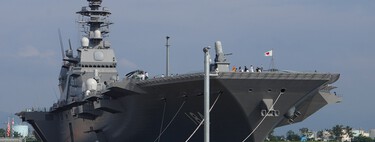
Japan has been researching electromagnetic technology since the mid-2010s. Recently, the Japan Acquisition, Technology and Logistics Agency (ATLA) successfully conducted the first documented live firing of a naval electromagnetic cannon targeting a real ship. The prototype, mounted on the JS Asuka test ship, is a 40-millimeter cannon measuring six meters long.
This system requires four large energy containers and fires small missiles of around 320 grams at speeds of 2,300 meters per second, generating kinetic energy comparable to that of a 1,000-kilogram car crashing into an object at 140 km/h.
Impact of the Tests
The tests achieved a record firing speed and successfully extended the barrel’s lifespan beyond initial expectations. While earlier estimates projected around 120 shots without failure, the system has surpassed 200 successful shots. Recent images from ATLA reveal the impressive damage caused by the projectiles, showcasing clean entry holes in the hull of the moving target ship.
Technological and Logistical Challenges
Despite the success, executing railgun technology presents significant challenges:
Stability of the Barrel: The system generates extreme heat, requiring efficient dissipation systems to maintain the barrel’s integrity and avoid accidents.
Energy Requirements: The cannon consumes vast amounts of electricity, necessitating substantial energy storage that can sustain intense firing intervals.
Miniaturization: Integrating such a large system onto a naval vessel is complex, demanding innovative solutions to reduce size without sacrificing power.
Future Prospects for Electromagnetic Technology
ATLA is working on evolving the electromagnetic system, with hopes for miniaturization that could see it mounted on various vehicles, including ground defense setups. Furthermore, the principles of electromagnetic acceleration could potentially be utilized in other fields, such as launching materials into space.
Global Context: Rivalry with the USA and China
Japan’s advancement in railgun technology is noteworthy, especially following the U.S.’s decision to cease development of similar weapons in 2021. Meanwhile, China continues to develop its electromagnetic technology, hinting at a race among the two nations. Both countries are entrenched in ongoing military and technological tensions, which are not anticipated to ease soon.
Images: ATLA, Japan Maritime Self-Defense Force