
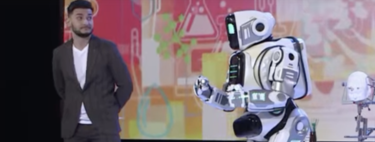
A few weeks back in Beijing, I stumbled upon the Galbot G1, marking my first encounter with an autonomous robot waiter. Expecting technological marvels like the ubiquitous external battery kiosks, I found this humanoid robot, which differs significantly from its peers as it operates in a public setting without human assistance.
The Robot That Serves Bottles of Water
Before diving into the details of the Galbot G1, understand the context. Galbot is among several Chinese firms investing in robotics. Their focus shifts from mere mechanical functions to enhancing the robot’s ‘brain’—integrating sophisticated language models with vision systems to enable general manipulation of objects.
Equipped with NVIDIA Jetson Thor hardware, the Galbot showcases the ability to react to its environment in real-time. It navigates autonomously using a stable base instead of legs, granting it both stability and autonomy. Its perception allows it to sense its surroundings, interpret them, and respond appropriately. Ultimately, it was designed to serve me a simple bottle of water—but it also represents a significant investment in robotic technology.
The Process of Getting My Drink
When I approached the drinks stand, unexpectedly devoid of customers, I decided to buy the least expensive flavored water to test the robot. The process was simple:
- You choose a product.
- Payment via AliPay or WeChat.
- The robot springs into action.
- You depart with your drink.
However, after experiencing this process, I realized it resembled a conventional vending machine more than an innovative service. The robot certainly adds a flair but operates at a pace reminiscent of much older technology.
Vending Machine or Waiter?
The experience raised a critical question: Is the Galbot G1 a genuine advancement in hospitality? My immediate thought was that waiters need not worry—this robot would not pose a threat. Upon reflection, it dawned on me that the Galbot might simply be a proof of concept showcasing the tech company’s capabilities and aspirations.
All the advanced technology and real-time decision-making, supported by numerous sensors, serves a grander vision: logistics, not just serving beverages. The Galbot serves only as a “light” hospitality model, showcasing its adaptability and potential for more practical applications in environments such as warehouses and delivery logistics.
Applications in Logistics
Video demonstrations illustrate the Galbot’s capacity to maneuver boxes and assess environments efficiently, akin to how it handled my drink order. I suspect that these vending experiences are more about fine-tuning the robot’s artificial intelligence rather than a viable business plan for beverage sales.
Ultimately, while the Galbot G1 is a captivating curiosity, it remains inadequate as a traditional service model. People were more interested in witnessing the mechanical marvel than purchasing drinks, forming considerable queues not for the drinks but to observe the process.
In closing, while robots like the Galbot G1 showcase impressive technology, its role as a standard service provider is still questionable. For now, it serves as an engaging demonstration rather than a practical solution in hospitality.
Images | Xataka