
The Integration of AI in Education: A Double-Edged Sword
What happens when a teacher uses artificial intelligence to prepare lessons, a student leans on it for homework, and the same teacher employs AI for grading? This scenario, while not mainstream yet, is quickly becoming plausible. The rapid adoption of these tools in classrooms invites a critical conversation: What do we truly learn when technology takes over significant educational tasks? Moreover, what might the educational system sacrifice if this reliance on tech becomes commonplace?
AI’s Role in Modern Education
The advent of AI in education isn’t a novel concept; in fact, various technological resources have supported teaching for years through platforms like Google Classroom and Moodle. However, the shift toward AI means educators can now leverage systems that generate content, provide solutions, and influence pedagogical decisions. Major tech companies, including Google, Microsoft, Anthropic, and OpenAI, are positioning themselves as pivotal players in this educational transformation.
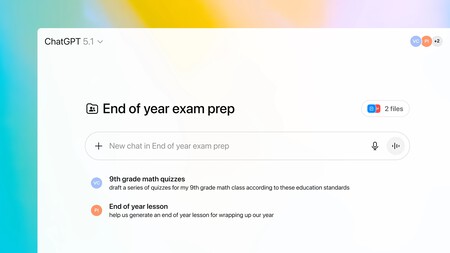
OpenAI’s recent introduction of ChatGPT specifically tailored for K-12 education marks a significant leap. Designed for verified teachers in the U.S., this version of ChatGPT comes with administrative controls for schools and school districts. Notably, OpenAI commits to not using the data generated in these educational settings to train its models, ensuring privacy and security.
Features of ChatGPT for Teachers
OpenAI’s ChatGPT offers a suite of features specifically designed to enhance the teaching experience:
Personalized Assistance
Teachers can customize responses by entering information about the school level, curriculum, and preferred formats. This personalized approach ensures that the provided material resonates with the classroom’s unique style.
Seamless Integration
ChatGPT can interact with existing educational resources, generating presentations via Canva, or importing lesson plans from Google Drive and Microsoft 365.
Collaborative Ideation
The platform showcases practical examples from other educators using ChatGPT, serving as inspiration for teachers looking to innovate in their classrooms.
Facilitating Collaboration
ChatGPT encourages teamwork among educators, making it easier to create custom models and shared templates for lesson planning and assessments.
Centralized Management
It offers a structured workspace with secure accounts and tailored roles for educators and academic leaders.
The Implications of AI-Assisted Learning
With approximately 800 million weekly users of ChatGPT, many of whom are educators, the potential applications for this technology in teaching are vast. Common scenarios include generating diverse examples for assignments and crafting multi-week teaching units.
However, the real challenge lies in using AI without diminishing the essence of learning. If both teachers and students rely heavily on AI to complete tasks, what value does the educational experience hold beyond mere compliance?
An MIT study indicates that while students using ChatGPT produced essays 60% faster, their cognitive effort diminished by 32%. This suggests that although results may be polished, critical thinking and active engagement could be compromised. A report from SBS Swiss Business School reinforces this point, linking increased AI use to a decline in critical thinking skills.
The Path Forward: Balancing AI and Education
As AI technology embeds itself deeper into the educational landscape, the future of learning hinges on a crucial question: how much of the learning process are we willing to delegate to AI? It’s clear that the classroom is now a battleground for tech companies, but the primary focus must remain on fostering the skills and thought processes that define quality education.
The upcoming decade presents a unique opportunity to discern the balance between leveraging artificial intelligence and maintaining the core values of education, which include critical thinking, creativity, and the ability to learn from mistakes. The challenge isn’t simply about incorporating AI into education; it’s about integrating it in a way that enriches, rather than detracts from, the learning experience.