
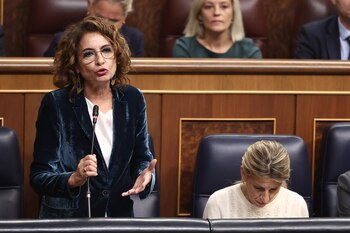
Montero Defends Against PP Attacks Amid Almería Controversy
The political landscape in Spain has recently intensified as María Jesús Montero, First Vice President of the Government and a key member of the PSOE, faced a barrage of criticism from the Popular Party (PP) regarding the ongoing Santos Cerdán case. Cerdán, a former Secretary of Organization of the PSOE, is embroiled in legal troubles that have seen him jailed, casting a shadow over the PSOE. In response, Montero has shifted the focus, calling on the PP to account for its own controversies, particularly involving suspected irregularities in the Provincial Council of Almería.
The Context of the Accusations
During a recent parliamentary session, Montero noticed the absence of questions from PP representatives, which typically revolve around the PSOE’s legal troubles. Instead, she pointed to the significant arrests within the PP, namely Javier Aureliano García, the president of the Almería deputation, and his vice president, Fernando Giménez, both implicated in alleged corrupt practices tied to the council’s contracts. “It is curious that this morning no member of the PP of Andalusia asked me why? Because they have to give explanations for what is happening,” Montero asserted, redirecting the narrative toward the responsibilities of the PP.
The Role of Corruption Allegations
The seriousness of the allegations made by PP spokesperson Muñoz cannot be understated. He cited a report from the Central Operational Unit (UCO) of the Civil Guard suggesting connections between Cerdán and significant kickbacks, referencing a specific instance where Cerdán was linked to a specific lucrative contract. “The millions of Mr. Cerdán’s bribes are beginning to emerge,” Muñoz remarked, labeling Cerdán as the linchpin of a broader criminal plot involving the PSOE.
Montero countered these claims by emphasizing the arrests within the PP, identifying them as indicative of systemic corruption, which she claims has become entrenched in the party’s operations. Her responses suggest that the allegations against her are a smokescreen meant to distract from the pressing issues within the PP itself.
A Battle of Responses: Cerdán vs. Almería
The public battle between Montero and PP figures highlights an unsettling trend in Spanish politics. Montero insisted that the issues within her party should not overshadow the pressing need for answers from the PP regarding Almería. The conversations surrounding politicized corruption appear to reveal a common problem in many political systems, where the narrative shifts based on which party is under scrutiny.
PP representatives have attempted to project an image of moral superiority while facing criticism over their leaders’ alleged misconduct. Montero’s phrase, “Governing is setting an example, and the only example you know how to give is how to corrupt yourself,” effectively encapsulates her position. She presses her rivals to face the consequences of their actions, questioning the integrity of leaders like Juanma Moreno, who claimed ignorance about the corruption charges despite ongoing investigations.
Conclusion: The Ongoing Political Struggle
In navigating through this complex web of accusations and counter-accusations, it is clear that Spanish politics is at a pivotal moment. The call for accountability from Montero puts a spotlight on the intricacies of corruption allegations that extend beyond individual parties. As the situation develops, it remains to be seen how both parties will address these contentious matters and what implications they will have for the public’s trust in governance. With elections on the horizon, the stakes have never been higher for both the PSOE and the PP.