
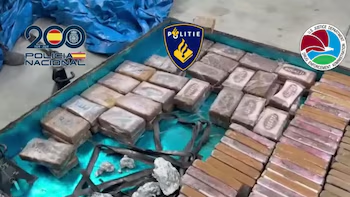
Dismantling the CJNG Operations in Spain: A Major Law Enforcement Success
The concerted effort by authorities to combat organized crime has reached a pinnacle with the recent dismantling of the Jalisco New Generation Cartel’s (CJNG) operations in Spain. This operation resulted in the arrest of 20 individuals, showcasing the ongoing battle against drug trafficking networks in Europe.
Details of the Operation
The National Police, in collaboration with the Drug Enforcement Administration (DEA) of the United States and police forces from the Netherlands, conducted the operation across multiple Spanish cities, including Madrid, Ávila, Bilbao, Valencia, and Toledo. Out of the 20 arrested, 15 individuals are currently held in provisional prison as investigations continue.
The CJNG had seemingly restructured its operations in Spain in response to a new influx of cocaine and amphetamines that were hidden within large industrial machinery. This shipment, which was sent via sea containers from Costa Rica, involved complicity from European mafia groups, particularly the Amato-Pagan clan from Italy.
The Cartel’s Network and Distribution Methods
According to the findings, the CJNG had developed a sophisticated operational structure within Spain. Investigators identified that the organization used farms in the Sierra de Madrid and rural parts of Avila to store drug supplies away from prying eyes.
The Central Court of Instruction Number 2 of the National Court, alongside the Special Anti-Drug Prosecutor’s Office, initiated investigations after tracking cocaine entering through a business network linked to one of the cartel’s primary targets. National distribution was managed from a farm in La Adrada (Ávila), with established routes to Bilbao and Valencia, employing vehicles equipped with hidden compartments.
For international drug trafficking, additional farms in Talavera de la Reina (Toledo) facilitated the transport of narcotics hidden within industrial machinery sent to Italy.
Key Players and Findings
The logistical operations in Spain were chiefly managed by a Spanish businessman who owned multiple commercial enterprises. This structure allowed for seamless integration of the profits from illegal drug sales into the legal economy.
During the two-phase operation, law enforcement targeted both the core elements of the CJNG’s operation and the primary distribution points located in Valencia and the Basque Country. Among those detained were two individuals categorized as priority targets by the DEA, alongside a mix of recently arrived Mexican operatives and connections to the Italian camorra.
Moreover, authorities seized a substantial amount of goods, including 1,870 kilos of cocaine, 375 kilos of amphetamine, €275,000 in cash, cryptocurrencies worth $15,000 USDT, as well as firearms, vehicles, and precious metals.
Implications of the Operation
This operation not only underscores the relentless efforts of law enforcement agencies but also highlights the CJNG’s ability to adapt and reorganize drug trafficking networks in Europe. The arrests and seizures demonstrate the international reach of the CJNG and their direct connections with European criminal organizations, marking a crucial step in the global fight against drug trafficking.
As the investigation continues, the implications of these findings will likely resonate throughout law enforcement circles, prompting further actions against organized crime syndicates that threaten public safety and stability in Europe.