
Understanding the Cecilia Strzyzowski Case
The recently concluded trial for the murder of Cecilia Strzyzowski has captivated Argentina, primarily due to the shocking circumstances surrounding the case. The prosecutor’s team in Chaco announced significant developments in a press conference following the verdict, citing the successful conviction of six of the seven defendants, despite the absence of not only a body but also a formal death certificate.
Prosecutor’s Challenges and Breakthroughs
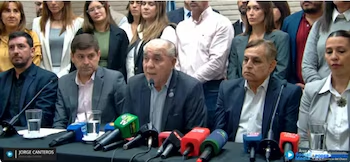
The Attorney General of Chaco, Jorge Canteros, emphasized the formidable task of reconstructing the crime without crucial evidence such as a corpse. “They told us that without a death certificate and without a body there would be no sentence, there would be no culprits,” he explained. The case took a pivotal turn when charred remains, thought to belong to Cecilia, were discovered, although they had been reduced to ashes.
Canteros went on to assert that these remains served as critical evidence in pinpointing the crime scene. “Cecilia’s body, mutilated and burned, spoke. It marked places for us,” he stated. He detailed how significant discoveries like a pendant and a burned suitcase provided insight into Cecilia’s life and led investigators to conclude that she had entered the family home alive.
The Guilty Pleas and Conditional Release
Among the convicted, César Sena, Cecilia’s ex-husband, alongside his parents Emerenciano Sena and Marcela Acuña, faced severe charges including murder aggravated by the connection with the victim and committed within a gender violence context. The trial focused heavily on their culpability, further perpetuated by the testimonies and evidence presented.
However, the hearing raised questions about the conditional release of one defendant, Gustavo Melgarejo, who was guilty of simple concealment. Prosecutor comments indicated that his freedom stemmed from having served two-thirds of the maximum penalty during pre-trial detention, despite the inadequacy of the hearing process.
Verdicts and Next Steps
As the trial progressed, the prosecution urged for appropriate sentencing for others implicated, including Gustavo Obregon and Fabiana González, both convicted of aggravated concealment. Upcoming censure hearings are set for November 26, where their penalties will be determined.
In a notable twist, Griselda Reynoso was the sole defendant acquitted, which led to her immediate release. The prosecution agreed that this resolution was “the most logical thing” following the jury’s decision.
The Complexities of a High-Profile Case
The case encapsulates not just the tragic circumstances surrounding Cecilia’s death but also the multifaceted challenges faced by the judicial system. Deputy Attorney General Miguel Fonteina remarked on the complexities inherent in the case, noting “powerful influences” that loomed over the investigation, with even threats reported during its initial stages.
This tragic and complex narrative continues to unfold, as the community remains on edge, awaiting further developments in this deeply impactful case. With the sentencing hearings approaching, the eyes of Argentina will remain fixed on the judicial proceedings in Chaco.