
The “Robot” That Wasn’t: Boris the Humanoid Illusion
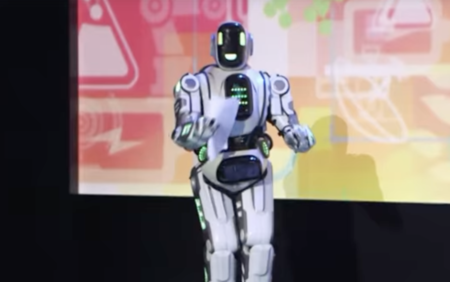
If “AI” is a trendy technological concept, robotics, particularly humanoid robots, have captured public attention for their potential and capabilities. In December 2018, during the Proyektoria Annual Science and Technology Forum in Yaroslavl, Russia showcased a humanoid robot named Boris. This event, attended by notable figures including the Minister of Education and potentially even President Putin, was aimed at inspiring young people in technology and robotics.
A Look Into the Robotics Race
While the United States and China fuel a competitive race in humanoid robotics, already having had successes like Boston Dynamics’ Atlas, Russia sought its place in the spotlight. Sadly for the Russian presentation, a critical flaw became evident—Boris wasn’t a robot at all.
The Russian Prodigy: An Illusion
Boris appeared on state television, dancing and engaging the audience with dreams of learning musical composition and art. He seemed like the pinnacle of Russian robotics; sleek in design with lights and a helmet, he was reminiscent of something out of a science fiction movie. However, suspicions soon emerged about the authenticity of this so-called robot.
Rising Doubts: Questions Emerge
Technology website TJournal highlighted several concerns regarding Boris’s authenticity:
- Absence of Sensors: Why were there no visible sensors?
- Unannounced Appearance: How did it appear without prior publicity?
- Online Buzz: Why wasn’t the advanced technology being discussed online?
- Fluid Movements: Why did the dance movements appear so fluid and human-like?
- Robotic Voice: The voice sounded overly mechanical.
- Unnecessarily Large Size: Why was Boris so much larger than typical humanoid robots?
It didn’t take long for the truth to come out. Observant viewers captured images revealing a human neck protruding from the back of Boris’s head, exposing the facade.
The Costly Costume
The shocking revelation was simple: Boris was simply a man in a costume. The suit, named Alyosha, was available for around €3,600 from a Russian company specializing in robotic costumes. It was embarrassing not just for the organizers but also for the Russian state broadcaster, which had portrayed it as a technological marvel.
A Comedy of Errors
In the aftermath, the video of Boris went viral, drawing mockery across social media platforms. Initially removed from their YouTube channel, it was shamefully re-uploaded days later with an interview that downplayed the incident, likening Boris to a whimsical character meant for children rather than an actual technological breakthrough.
The Broader Implications for Russian Robotics
The fallout from Boris’s revelation only compounded existing skepticism surrounding Russian technological claims. This wasn’t the first instance of deception either; a year later, during a soccer match, yet another “robot” turned out to be a person in disguise.
International media noted this incident as perhaps one of the most embarrassing examples of Russian state media misrepresentations, showing a clear gap between reality and self-proclaimed advancements.
The Next Attempt: AIdol
In 2022, Russia attempted to present a new humanoid robot named AIdol, which faced its own set of amusing failures, such as tripping and falling on stage. At least AIdol, unlike Boris, was a real attempt at robotics.
The unexpected circus surrounding Boris serves as a cautionary tale in the world of robotics and AI. It highlights the fine line between ambition and authenticity and reminds us to approach claims of futuristic technologies with a critical eye.
Images: ПроеКТОриЯ