
The Collusion of Power: Panama’s Corruption and China’s Influence
The Rise of Juan Carlos Varela
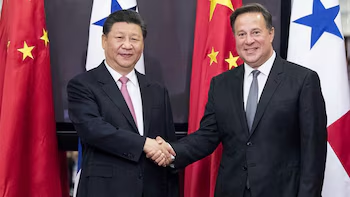
Juan Carlos Varela, the former president of Panama, serves as a case study in how a single corrupt leader can drastically alter a nation’s trajectory. His clandestine dealings with the People’s Republic of China (PRC) reveal a disturbing pattern where personal gain is prioritized over national sovereignty. Between 2016 and 2018, Varela’s administration witnessed the strategic takeover of key sectors by Chinese state-owned enterprises, effectively embedding Beijing’s influence in Panamanian soil.
Beijing’s Strategy of Elite Capture
In late 2017, prior to a critical diplomatic shift, Varela received a confidential alert regarding a ¥1 billion (approximately US$145 million) “donation” from China. Officials advised him to avoid linking the donation to the severing of ties with Taiwan, emphasizing the transaction’s dubious nature. As a result, this substantial inflow vanished from public accounts entirely, raising questions about Varela’s motives. Documents later revealed in the Varelaleaks emphasized how Varela not only navigated Panama’s diplomatic realignment with secrecy but also siphoned wealth for his personal network.
Consequences of Corruption on Sovereignty
The repercussions of Varela’s choices extended far beyond personal gain. Almost immediately after the diplomatic shift to recognize China in June 2017, Chinese companies rapidly infiltrated crucial sectors. They secured access to ports, telecommunications, and surveillance systems adjacent to the Panama Canal. Washington’s alarmed response included blacklisting Varela for “significant corruption” in 2023, highlighting the implications of his actions.
The Cost of Strategic Projects
During Varela’s tenure, Chinese enterprises won several high-profile contracts, including the controversial Landbridge Group’s Colón Container Port project, initially estimated at $900 million. Throughout this period, the U.S. government expressed concerns over what they described as “predatory” economic practices by the PRC.
One particularly contentious proposal was a new Chinese embassy situated on the Amador Causeway, which would allow PRC oversight of ships passing through the canal. This proposal faced extensive pushback from U.S. officials, ultimately leading Varela to relocate the site and showcase the delicate balancing act he was performing.
Technology and Security Compromises
In a highly questionable decision, Varela replaced General Dynamics with Huawei for Panama’s C5 security center. This move allowed Chinese technology to permeate critical security infrastructure, raising alarms among U.S. military officials. Despite warnings that Huawei’s involvement represented a serious national security threat, Varela pressured the media to minimize discussions about China and quash dissent.
The Withdrawal from the Belt and Road Initiative
After Varela’s exit from power, Panama began reversing course on its engagement with China. By 2019, the new administration began canceling or slowing down several PRC-led projects, culminating in Panama’s formal withdrawal from the Belt and Road Initiative in 2025. This marked a significant turn in Panama’s geopolitical alignment as it sought to combat the risks of dependency on corrosive foreign capital.
Lessons Learned
Varela remains a cautionary tale—his actions not only damaged Panama’s international standing but also exposed the vulnerabilities inherent in its democratic institutions. The case illustrates how transparently corrupt leadership can lead to national crises, forcing small countries into complicated geopolitical dynamics.
For Panama, the lesson is clear: national interests cannot be bartered away, and prosperity built on murky foundations breeds long-term dependency. As the Panama Canal continues to serve as a strategic chokepoint, the nation must find a way to navigate between competing global powers while safeguarding its sovereignty.