
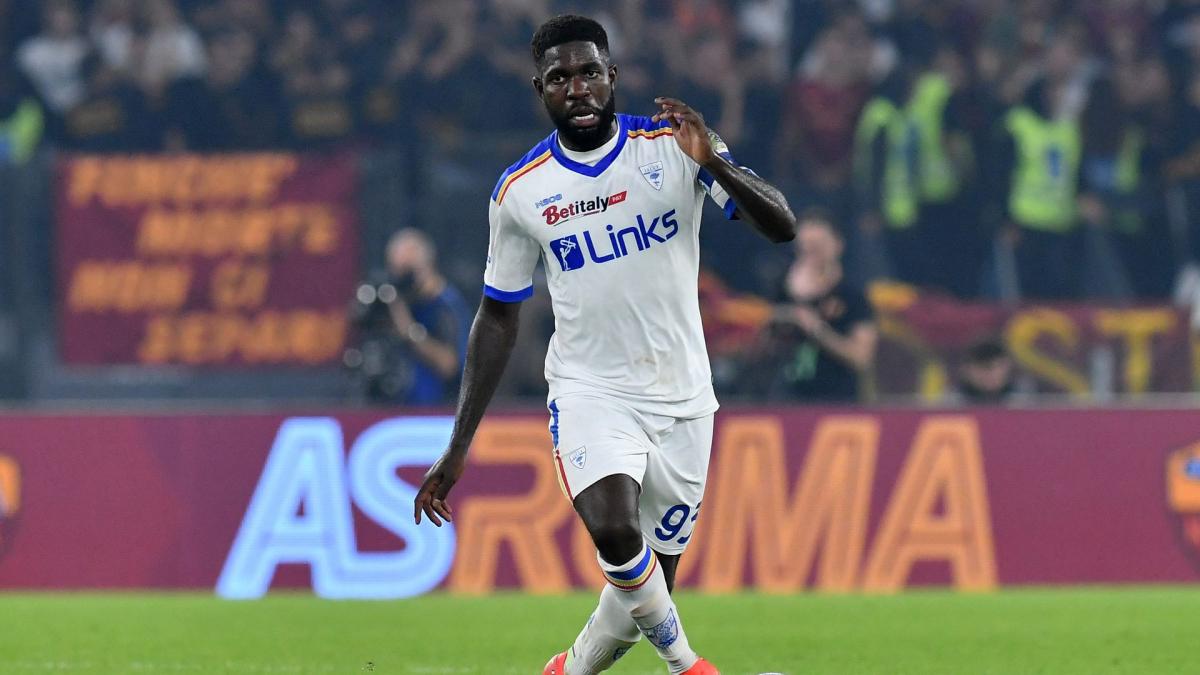
## Samuel Umtiti’s Emotional Stand Against Racism
Samuel Umtiti, a notable figure in football and a 2018 World Cup champion, recently shared his poignant experience with racism during a Serie A match between Lecce and Lazio Rome on January 4, 2023. Alongside his teammate Lameck Banda, Umtiti faced monkey chants from Lazio supporters, prompting a brief interruption of the match by the referee. This incident unveiled not just the immediate anguish faced by players but highlighted a broader issue of racism in sports.
### Umtiti’s Heartfelt Response
Reflecting on that moment, Umtiti shared a powerful sentiment: “I felt so good in that match, like I was an Avengers. I said: ‘No one is going to come and disturb me in my fun, not even the fans. We continue to play.'” Despite the troubling atmosphere, Umtiti resolved to maintain focus on his performance rather than the discouraging actions from the crowd. His emotional reaction post-match, where he shed tears in the embrace of his supportive president, Saverio Sticchi Damiani, illustrated the gravity of the emotional toll such incidents can inflict on athletes.
### The Need for Change
Umtiti’s comments extend beyond personal experience; they serve as a clarion call for systemic change in how racism is addressed in football. He asserted, “What happened in the stands had an impact on me, but it’s like that in everyday life, in football too.” According to Umtiti, simply stopping matches in response to racist chants is insufficient. He articulated a pressing concern: “It doesn’t change anything.”
This brings to light a critical point—while players can take a stand, lasting change requires the involvement of football authorities and regulatory bodies. Umtiti emphasized that without concerted efforts from all stakeholders, the cycle of racism would persist, echoing a broader frustration felt within the sports community.
### Concrete Measures Needed
Umtiti proposed that practical measures, such as enhanced video surveillance, could serve as effective tools against racism in stadiums. He observed, “If we really want to stop something, we stop it.” His remarks resonate with players, fans, and officials who seek meaningful progress. Umtiti’s assertion that certain clubs have managed to eradicate such behavior serves as hope and a roadmap for others.
### Conclusion
Samuel Umtiti’s emotional message underscores the urgent need for a collective response to racism in sports. By sharing his personal experience, he invites everyone connected to football—players, fans, and authorities—to take responsibility. The power of football to inspire change cannot be underestimated, and Umtiti’s story serves as a motivating force for all to stand against racism. As fans cheer and players strive to excel on the pitch, it is imperative that the beautiful game remains a space free of discrimination and hate.
### Call to Action
Let us unite against racism in football and beyond. Umtiti’s experience reminds us that while individual actions matter, systemic change is essential. Join the conversation, support initiatives that combat racism, and be part of the solution for a more inclusive sporting world.