
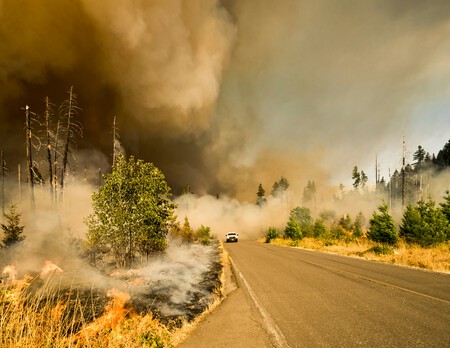
“They are unquenchable,” said a few months ago Inazio Martínez de Arano, director of the Mediterranean Regional Office of the European Forest Institute. Sixth-generation fires “cannot be extinguished until the weather conditions change.” And that is why they have become one of the curses of the modern world.
What is a Sixth-Generation Fire?
These are extreme fires whose intensity is sufficient to merge with the atmosphere and create their own weather conditions; in other words, the enormous amount of energy they release can generate their own atmospheric conditions. It’s crucial to understand that it’s not merely a question of size, but rather of behavior (and the interaction between fire and the surrounding atmosphere).
These fires are not fundamentally different from traditional forest fires; they simply represent an evolution that we have not encountered before. However, this evolutionary leap is significant.
Causes and Characteristics of Sixth-Generation Fires
Generally, there are three major causes that combine to facilitate these sixth-generation fires:
- Extreme Weather Conditions: While we’ve been discussing the consequences of climate change for years, we often overlook that the problem lies not only in the climate we are heading toward but also in the path leading us there. Climate changes cause ecosystems to lose their self-regulatory capacity, leading to prolonged heatwaves, dry terrain, abundant combustible materials, or abnormally strong winds, thus creating a conducive environment for such events.
- Rural Abandonment and Lack of Forest Management: The forested lands in countries like Spain have increased over the decades, but forest management has not kept pace. This is primarily due to policies favoring reforestation and rural depopulation, which led to a retreat in human productive activity. The majority of forests are privately owned, lacking active management, leading to dense, uncontrolled biomass rather than ecologically sustainable mature forests.
- Landscape Vulnerability: The vulnerability of the landscape involves not only the topography but also the design of the landscape. Previously, the typical dimensions of fires we faced were much smaller than sixth-generation fires. This makes existing firebreaks (natural or artificial) less effective.
Why Are Megafires Becoming More Frequent?
The combination of climate change (increasingly longer and intense heatwaves, droughts, desertification, etc.) and changes in land use (rural abandonment, reduction in agro-livestock activities, disappearance of forest operations, insufficient management, etc.) creates ideal conditions for high-intensity fires.
It is not a “divine curse,” but rather a situation where we have failed to find solutions to the retreat of human activity in rural areas. The capacity we have to extinguish fires is severely overmatched in the case of these sixth-generation fires, making the damages huge whenever a megafire occurs.
Why Are Fires Harder to Extinguish Than Decades Ago?
The world has changed significantly over the past few decades. This has resulted in forest fires that are more challenging to extinguish than in the past. Several interrelated factors contribute to this:
- The climate change crisis is a key determinant, increasing the likelihood of higher temperatures, prolonged droughts, and extreme weather events.
- Accumulation of Combustible Material: Inadequate forest management can lead to the build-up of combustible materials. For instance, a rainy spring may result in a surge of vegetation that, once dried, turns the area into a “powder keg.”
- Abandonment of Rural Areas: The depopulation effect contributes to the lack of traditional maintenance, which includes grazing and timber industries.
- Extreme Fire Behavior: The emergence of fifth- and sixth-generation fires (more virulent and intense) makes it almost impossible to control certain situations.
How Long Does a Sixth-Generation Fire Last?
There is no fixed or average duration for these fires. Since they are virtually impossible to extinguish using conventional methods, management continues until unfavorable meteorological conditions allow for better control. They can burn violently and rapidly for days or even weeks if nothing facilitates their containment.