
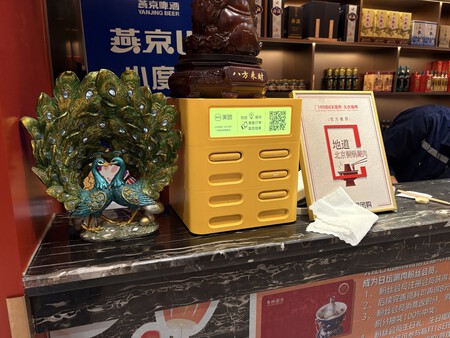
The Rise of Power Banks as Urban Infrastructure in China
Recently, my journey to China opened my eyes to an incredible aspect of urban life: the prevalence and convenience of portable battery rentals. After unwittingly discovering that I lacked the necessary certification for power banks required for airborne travel, I anticipated purchasing one upon arrival. However, I was taken aback to find numerous charging stations packed with external batteries at every corner.
Power Banks: A Necessity in Daily Life
In China, smartphones are central to everyday activities—from banking with AliPay to socializing via WeChat. Yet, this heavy reliance on technology drains phone batteries quickly. To address this, a network of battery rental stations exists, allowing users to charge their devices on-the-go.
How It Works
The rental process is remarkably simple:
- Scan the QR code at the station.
- Select a removable battery.
- Charge your device while eating or moving around.
- Return the battery to any other station in the network.
My Personal Experience with Battery Rentals
During my stay in Beijing, I decided to rent a power bank from a station close to my hotel. After configuring my Revolut card with the app, I was ready to go. The process was straightforward, and I appreciated not needing my own charging cable, as the rental included various options.
Charging Speed
The battery offered a 5,000 mAh capacity with power output of 5V/2.4A, allowing for slow charging, which was fine for my needs. Over a lunch period, I managed to get:
- From 26% to 45% in 30 minutes.
- To 64% after an hour.
- To 82% at 90 minutes.
This made for a convenient dining experience while replenishing my phone’s battery enough to get through the day.
Cost and Future Prospects
The rental cost was just 0.12 yuan per minute (approximately 0.014 euros), which felt reasonable. With a focus on pricing, it’s important to note that demand has seen costs increase in various locations, leading to mixed opinions among both users and businesses about the rental system’s fairness.
Despite potential drawbacks, battery rentals are extremely favorable for tourists and represent a rapidly growing market. By 2023, predictions suggest a valuation reaching $1.7 billion and aspirations of hitting $5.6 billion by 2029.
The European Connection
As of now, Europe has yet to embrace this battery rental model to the same extent as China. The convenience and affordable nature of these rentals indicate a potential opportunity for expansion across urban spaces in Europe, where on-the-go charging solutions are increasingly in demand.
Overall, my experience highlighted just how essential these power banks have become in urban infrastructure in China, and it will be interesting to see when similar models take root in Europe.