
Elon Musk, Jeff Bezos, Mark Zuckerberg, and Larry Ellison currently reign as the richest individuals in the world. Their immense personal wealth surpasses the annual GDP of many countries, shedding light on the scale of their fortunes.
However, this overwhelming concentration of wealth isn’t confined to contemporary eras. Marcus Licinius Crassus, one of the richest men in the Roman Empire, had a fortune estimated to rival the entire annual budget of the Roman treasury.
What is striking about Crassus’s story is how his methods of wealth accumulation could easily find a parallel in the modern monetary milieu of today’s world.
Millionaire on Father’s Side
Historian Plutarch chronicled Crassus’s life in various chapters of Parallel Lives, providing insight into one of Ancient Rome’s wealthiest figures.
Born around 115 BC in Rome to the Licinia gens , Crassus hailed from a plebeian family that, while not immensely wealthy, enjoyed a comfortable socioeconomic standing. His family had significant political presence, with his father, Publius Licinius Crassus, serving as consul in 97 BC. Tragically, the civil war between Gaius Marius and Lucius Cornelius Sulla claimed the lives of his father and brother, leading to a dramatic fall from grace that stripped the family of their wealth.
Following the death of his family, Crassus inherited a modest fortune but had to seek refuge in Hispania for several months. His fortunes changed when he aligned himself with Sulla, gaining entry into the Senate and the opportunity to reshape his destiny . From this powerful position, Crassus began to acquire the wealth that earned him the moniker Dives , meaning “the rich one.” Initially starting with 300 talents, his fortune surged to an astounding 7,100 talents by the end of his political career.
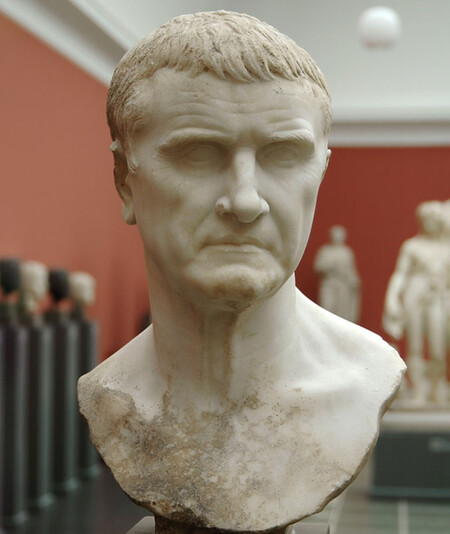
Bust of Marcus Licinius Crassus
Real Estate Speculation is Not a Modern Invention
Crassus’s great wealth largely stemmed from purchasing properties confiscated from his political enemies during Sulla’s reign. As political opposition lost their assets, many properties were sold at severely reduced prices, providing Crassus with ample opportunity to acquire valuable land.
In Rome, the insulae, typically wooden and cement structures, were often subject to destructive fires. Crassus seized this opportunity by employing a brigade of slaves, both as conjurers of firefighting and as potential arsonists.
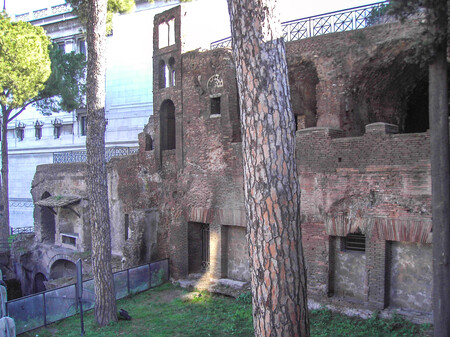
Remains of a Roman insulae
As Crassus’s wealth expanded, he acquired more slaves , leveraging their skills in architecture, masonry, and carpentry, thereby constructing a valuable slave workforce. When fires erupted, he would approach owners with low-price offers for their properties, dampened by the threat of imminent destruction.
After negotiating a sale, his efficient brigade would extinguish the fires and restore the properties. The restored assets could then be resold at significant profits due to the practically free labor provided by his slaves.
Many historians claim that his slaves became more valuable than even the land he owned. Despite his ambitious nature, Crassus eventually ventured into political alliance with prominent leaders Julius Caesar and Pompey to form the First Triumvirate. His aspirations were steeped more in securing contracts and favors than the welfare of Rome.
His Downfall: Exchanging Ambition for Envy
However, Crassus’s insatiable thirst for power led to a fatal miscalculation. In 72 BC, he was assigned to crush the uprising led by Spartacus, an insurrection that ensnared as many as 120,000 slaves. Although he successfully squeaked out a crucial victory, it was ultimately Pompey who took the limelight from the campaign.
Seeking to outdo Pompey, Crassus ventured into Syria but suffered a catastrophic defeat at the Battle of Carras in 53 BC. His demise, along with 20,000 soldiers, resulted in his head being presented to the Parthian king Orodes II, coining the term “gross error” as a lasting reminder of his misjudgment.
Marcus Licinius Crassus vs Elon Musk
Both contemporary and ancient fortunes are hard to quantify precisely. Crassus’s wealth was pegged by Plutarch at around 7,100 talents, a measurement roughly equivalent to 34-21 kilograms of silver but varies across history.
While estimating his fortune using a speculative modern conversion, if silver stands at 1,359 euros per kilo , Crassus’s wealth might approximate 328.35 million euros . This approximation does not account for other assets like properties and slaves.
Additionally, Pliny the Elder estimated Crassus’s wealth between 200 million and 500 million sesterces. To put this in perspective, using the current minimum wage in Spain might equate his total wealth to around 9,208 million euros . Although speculative, this analysis illustrates the staggering wealth concentration of Crassus—a reflection not unlike today’s billionaires, albeit with substantial historical and economic disparities complicating direct comparisons.
Ultimately, the study of Marcus Licinius Crassus not only unveils the past but also serves as a cautionary tale for modern millionaires. As wealth continues to accumulate in the hands of a few, understanding the implications and lessons from history are more crucial than ever.