
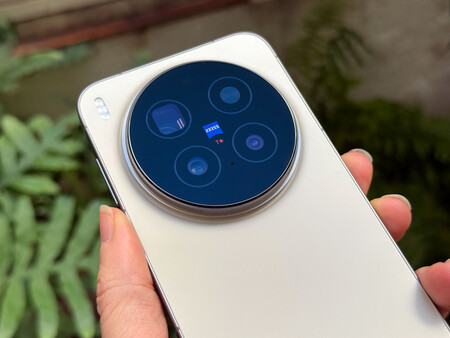
The Vivo X300 Pro has arrived to make a statement in the high-end smartphone market. One look at this device showcases its flagship feature : the camera. Along with its large camera module, the Vivo X300 Pro is shipped with a photography kit that transforms it into a full-fledged camera . Let’s explore what else this beast from the Chinese brand offers.
Vivo X300 Pro Technical Specifications
| |
|---|---|
Display | 6.78″ LTPO 2,800 x 1,260 px 120 Hz Refresh Rate 2,160 Hz PWM Dimming HDR 10+, Dolby Vision |
Processor | MediaTek Dimensity 9500 |
Memory | 16 GB |
Storage | 512 GB |
Battery | 5,440 mAh Li-Ion 90W Fast Charging 40W Wireless Charging |
Rear Cameras | Main: 50MP ZEISS Sony LYT-828, f/1.57, 24 mm Ultra Wide: 50MP, JN5, f/2.0, 15 mm Telephoto: 200MP, ZEISS APO, Samsung HPB, f/2.67, 3.7x optical zoom, 85 mm |
Front Camera | 50 MP, ZEISS; JN1, f/2.0 |
Operating System | OriginOS 6 Android 16 |
Connectivity | WiFi 7 5G Bluetooth 6.0 NFC |
Others | IP68 Resistance USB C 3.2 Stereo Speakers VS1+ V3+ Image Chip Ultrasonic Fingerprint Reader |
Price | Phone: 1,399 euros Phone + Photography Kit: 1,599 euros |
Design: A Little Bit of Mobile in Your Camera
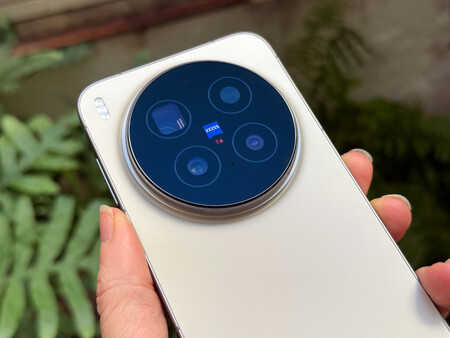
The design of the Vivo X300 Pro does not particularly innovate; it’s quite basic. Rounded corners and edges, well-utilized front, metal frame … it follows the typical smartphone aesthetics. My model is beige (also available in black) and the metal frame matches a very elegant warm tone. Vivo has opted for a matte texture for both the back and the frame, making it more pleasant to the touch and less prone to fingerprints than glossy finishes.
However, the camera module is massive . I mean, it’s really big, occupying nearly the entire upper third. It sticks out from the chassis by about 5 millimeters according to my measurements. Setting it on a table results in it leaning quite a bit, but as the module is centered and spans nearly the full width, the phone doesn’t wobble. The weight distribution can be a bit awkward. Holding it vertically isn’t a problem unless you grip it from the bottom; it can actually use the camera module as a thumb rest. Watching videos horizontally feels off, as the camera’s weight becomes noticeable.
Display and Sound: Big and Bright
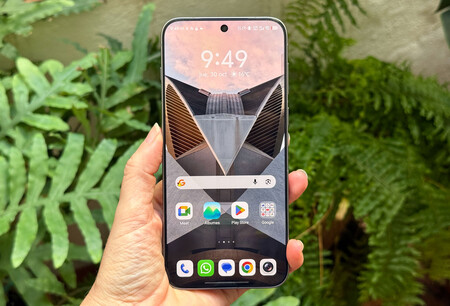
The front is dominated by a 6.78-inch AMOLED display with a Full HD+ resolution and a 120Hz refresh rate. It’s surprising that Vivo didn’t opt for a QHD resolution for a high-end device, similar to its predecessor, the Vivo X200 Pro. The sharpness is more than sufficient, with no visible lack of definition, but in a top-tier device, one would expect that extra clarity .
However, there are no complaints regarding the fluidity offered by the 120Hz . It comes with intelligent adaptive refresh enabled by default, resulting in a very responsive panel without noticeably impacting battery life.
In terms of brightness and calibration, it performs well, but the best part is Vivo offers various options to make adjustments. The ‘Eye Comfort and Protection’ menu allows us to activate ‘Comfort Hiding’, which subtly warms the display. This isn’t the typical blue light filter; it adjusts automatically via AI, resulting in a much more pleasant experience.
In terms of sound, the main speaker is located at the bottom, with a less powerful one at the front, just above the camera. The volume is more than adequate, but at maximum levels, it can become shrill , lacking in bass depth.
Performance, Software, and Battery Life: MediaTek Taking the Helm
Vivo sticks with MediaTek for another year, using the MediaTek Dimensity 9500. While benchmark tests give better scores to chips from Apple and Qualcomm, in practice, MediaTek’s chip provides excellent performance . Running demanding games like Genshin Impact or multitasking didn’t cause any issues, nor did it overheat excessively—only showing elevated temperatures during benchmarking tests.
VIVO X300 | iPhone 17 Pro Max | Google Pixel 10 Pro | Samsung Galaxy S25 Ultra | Samsung Galaxy Z Fold 7 | Oppo Find X8 Pro | |
|---|---|---|---|---|---|---|
Processor | MediaTek Dimensity 9500 | A19 Pro | Tensor G5 | Qualcomm Snapdragon 8 Elite | Qualcomm Snapdragon 8 Elite | MediaTek Dimensity 9400 |
RAM | 16 GB | 12 GB | 16 GB | 12 GB | 16 GB | 16 GB |
Geekbench 6 (Single/Multi) | 2,972/7,957 | 3,750/9,731 | 2,279/5,364 | 3,851/9,451 | 2,527/8,582 | 2,685/8,398 |
3D Mark Wild Life Unlimited | 25,997 | 25,146 | 12,940 | 23,731 | 20,138 | 22,312 |
3D Mark Wild Life Stress Unlimited | 26,318 / 10,563 | 26,091 / 17,919 | 12,583/6,023 | 23,965/19,531 | 21,197/8,840 | 23,330 / 18,964 |
With the X300 Pro, Vivo departs from its FuntouchOS layer and introduces OriginOS 6, which has been in use in China for several years. Based on Android 16, it boasts a completely renewed design with an abundance of customization options. Users can alter the icon design, interface colors , and even choose how the phone unlocks with the fingerprint.
Goodbye, FuntouchOS. Hello, OriginOS6. Regardless of its name, the customization options remain endless.
By default, it comes with an app drawer, but this can be disabled to have all apps on the home screen. It also offers numerous widgets that complement the chosen interface design. Among the pre-installed apps like Booking, Netflix, and TikTok, they can easily be uninstalled if unwanted.
Regarding battery performance, it’s intriguing. The international version features a 6,510 mAh battery, while the Spanish version contains a smaller 5,440 mAh battery. Surprising initial perceptions of battery life were positive. With 6-7 hours of screen time, despite its smaller capacity, this is an acceptable duration .
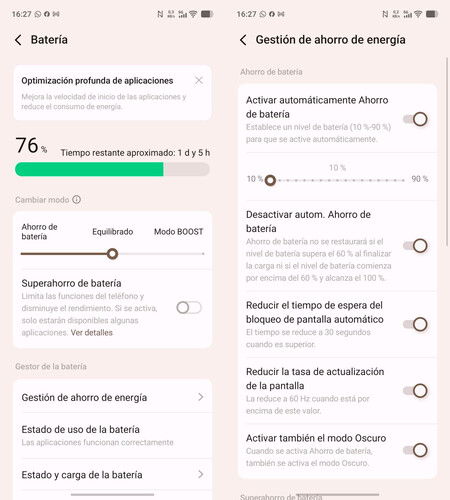
Vivo also provides various battery-saving options.
After the initial days, I usually ended the day with about 20% battery, whereas on intense usage days—especially during photography outings—I had to recharge. Here, the photography kit saved the day , featuring an integrated battery grip that prevented a complete battery drain. Vivo also offers numerous features for power-saving optimization.
As for charging, a charger isn’t included , and none of my available chargers support the 90W that it can handle. Using a 40W charger, it attained full charge in about 1 hour and 20 minutes. Interestingly, when the battery runs out, the phone continues to function for a few minutes, allowing emergency calls.
Cameras: A Well-Executed Yet Familiar Set
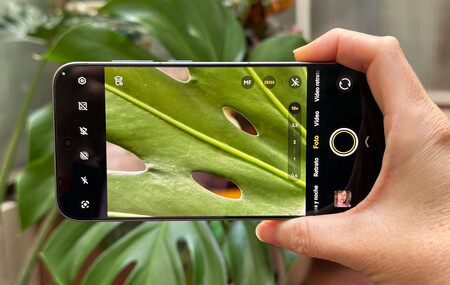
The size of the camera module serves as a significant indicator: this phone is for those who love mobile photography and desire a premium camera experience. Let’s explore its offerings:
- Main Camera: 50 MP, f/1.6, 23 mm (wide angle), 1/1.28″, 1.22 μm, PDAF, OIS
- Telephoto: 200 MP, f/2.67, 85 mm (periscope telephoto), 1/1.4″, 0.56 μm, multidirectional PDAF, OIS, 3.7x optical zoom, macro 2.7:1
- Ultra Wide: 50 MP, f/2.0, 15 mm, 119° (ultra wide angle), 1/2.76″, 0.64 μm, AF
Last year, my colleague was thrilled while testing the X200 Pro, and I can understand why, especially given that the Vivo X300 Pro features the same camera setup as its predecessor. Even then, the performance of the primary sensor didn’t seem to surpass its competition. But with a year’s time passed, will it hold up?
The camera app hasn’t drastically changed. It retains a classic layout with photo and video modes arranged above the shutter button, along with additional tools at the top. Some new icons have been added for quickly accessing the telephoto feature brought by the kit.
Main Camera Performance

Main sensor shot with default settings

Detail at 100%
The primary sensor produces results that stand out among the rest. Images offer an impressive dynamic range , sharpness, and well-balanced colors.
However, under close inspection, Vivo maintains a somewhat aggressive processing style . While this is not immediately noticeable on smooth surfaces, complex textures reveal an excessive sharpening effect .

The details of textures hold up well in close-up shots. It’s worth noting that various color modes exist, with the default set to ‘Vivid.’ This mode does exactly what one would expect: it enhances colors, achieving generally well-balanced tones, but can sometimes be a bit over the top.


Detail at 100%
In indoor conditions with artificial light, the camera performs admirably. The natural bokeh from the lens yields interesting results, even in less favorable conditions. Furthermore, there is a manual focus mode for more precise adjustments.

Shot at maximum resolution (50MP)

Detail at 100%
The sensor boasts 50 megapixels , and unless expressly selected, the photos taken are at 12 megapixels. If fine detail is critical (like for printing), one must ensure to shoot at maximum resolution.
Ultra Wide and Telephoto

0.6x, 1x, 2x, 3.5x, and 10x zoom options
The cameras on the Vivo X300 Pro offer an impressive range of functionality. Vivo allows zooming by swiping or selecting from five preset options on the shutter button. While the optical zoom extends only up to 3.7x, it holds its own even when pushed beyond that limit. The 200 megapixels do come through.

Ultra wide (0.6x)

Detail at 100%
As is customary, the ultra-wide lens is notably less effective than the primary camera. The sensor is smaller and the lens less luminous, yet still offers decent results if lighting conditions are favorable.
Upon close examination, significant differences in quality can be observed between the center of the sensor and its edges. The aggressive post-processing becomes more evident, causing a pronounced watercolor effect due to distortion.

Telephoto at 3.5x
The optical zoom extends to 3.7x, delivering excellent results in terms of color and sharpness, even more consistent than the ultra-wide images.

10x Zoom

Detail at 100%
Using digital zoom options of up to 10x , decent results are still attainable, especially in general perspectives. However, zooming beyond the optical range leads to images that appear heavily processed and image quality deteriorates significantly at higher magnifications.
Photography Kit
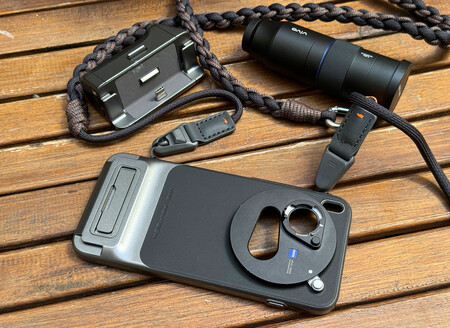
Case, strap, grip, and telephoto lens.
Vivo has joined the trend of camera smartphones by providing a kit that effectively turns it into a camera . For the launch, this kit can be purchased along with the phone for 1,599 euros , which makes it an additional 200 euros atop the phone’s price of 1,399 euros .
The kit includes a case with a strap, a grip with physical buttons and integrated battery, and the telephoto lens. Notably, filters and supports can be attached to the case.
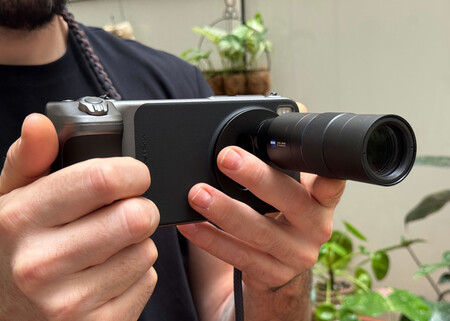
When fully assembled, the phone transforms into a literal camera , albeit rather cumbersome. The grip is comfortable and features controls for shooting, zooming, adjusting exposure, and recording video. However, the telephoto lens raises concerns, not due to its performance but because of its fixed focal length that limits versatility.

200 mm, 400 mm, 800 mm, and 1,600 mm
This 200mm telephoto lens enables significant zooming, allowing for close-up captures from great distances, digitally extending to 1,600 mm . To illustrate this, I stood about 200 meters away from a 35-story building, and capturing identifiable images was indeed possible.

Photos taken at 200 mm yield excellent quality with a smooth gradual blur , indicative of high-quality lenses. However, the photography kit may not appeal to everyone . I can see it being beneficial for photography enthusiasts looking to maximize the mobile experience, but personally, I found carrying and assembling all the components somewhat cumbersome.
Portrait Mode

Portrait mode at 50mm
The portrait mode impressed me with its flexibility in customizing blur levels and enabling post-editing. Vivo maintains its reputation, as even exaggerated blur effects yield excellent cropping results.
However, it tends to over-soften skin textures, and color reproduction can often appear flat, detracting from overall quality.

Portrait mode at 50mm
It performed well with subjects like pets, even as they moved— the blur effect mimics a professional lens capability.
Front Camera Performance

0.8x, 1x, and 2x options
While zooming on the rear cameras is commonplace, having three focal lengths on the front camera is less typical. Vivo includes quick-access options for preferred framing. Personally, the 2x zoom on the front camera feels unnecessary.

The front camera performs adequately, producing sharp images, but the color rendition disappoints, appearing overly washed out, leading to images that fall flat.
Video Recording
The Vivo X300 Pro captures good-quality videos, but it doesn’t shine as brightly in this aspect compared to its photographic performance. Stabilization is competent, offering versatility from zoom features, but the phone is erratic during lighting changes, occasionally producing overexposed footage.
Vivo X300 Pro: Verdict and Rating from Xataka
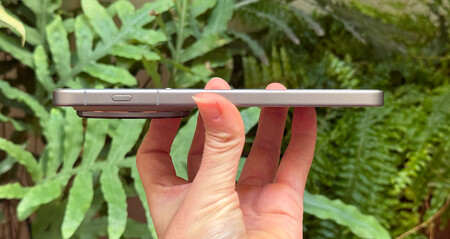
I hadn’t enjoyed testing a mobile camera like this in quite some time. The massive module hinted at fun, and in this regard, it didn’t disappoint. Yet, in a phone where the camera is its defining personality, sticking with the same setup from last year raises questions.
I haven’t enjoyed testing a mobile camera this much in a long while. If you’re after versatility, the Vivo X300 Pro will serve you well.
The camera offers ample versatility , but coupled with the photographic kit, it evolves into a complete camera setup. The kit is appealing for those truly wanting to harness the mobile photography experience, though it might be cumbersome for everyday carry. Hardware-wise, there’s little to criticize: the display is extremely adaptable and comfortable for extended usage, performance is stellar, and though battery capacity has been trimmed from the international version, it still holds up. All in all, a top-tier device for anyone seeking an ultra-versatile camera.
9.0
Design 9
Display 9
Performance 9
Camera 9
Software 9.25
Battery 8.75
Pros
- The camera is among the most versatile available.
- Excellent viewing experience from its display.
- High-end performance.
Cons
- Utilizes the same cameras as last year.
- Pricing is steep, particularly with the photographic kit exceeding 1,500 euros.
Images | Amparo Babiloni, Xataka.
Further Reading: OPPO Find X9 Pro review: In response to the question of how much technology to pack into a mobile, Oppo has answered with “yes.”
This device has been provided for testing by Vivo. You can consult how we conduct reviews at Xataka and our policies on relationships with companies.