
A Deep Dive into Action’s Rapid Expansion in the Spanish Retail Market
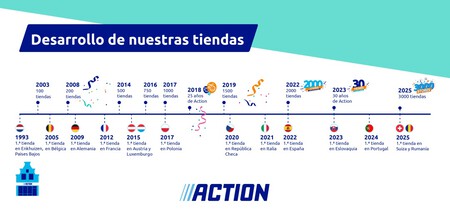
The already competitive and highly contested sector of retail in Spain has become more complicated with the emergence of a new actor—Action. This Dutch chain is already being viewed as a direct competitor to established giants like Mercadona and Aldi, although its approach to retail differs significantly. Action’s rapid growth has positioned it as a noteworthy player, boasting over 3,000 stores across 13 countries , serving an impressive 20.2 million customers each week.
Understanding Action’s Unique Selling Proposition
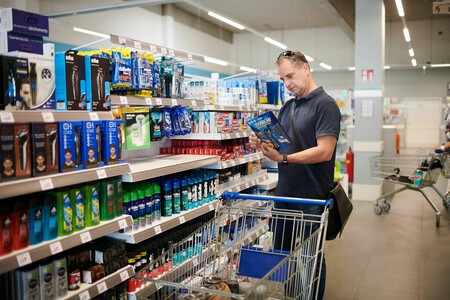
So, what exactly is Action? At first glance, it appears to be just another chain of stores, but its expansion rate and unique strategies set it apart. The company has made a significant commitment to value through aggressive pricing and constant promotions . Action aims to provide a broad catalog of items ranging from household goods to electronics , toys , and sports equipment . Unlike traditional supermarkets, which pay more attention to fresh foods, Action focuses primarily on non-food items. Its offerings include snacks, sweets , and some packaged foods but do not include perishable goods like meats or fresh produce.
Price Strategy: The Heart of Action’s Model
One of the primary differentiating factors in Action’s strategy is its commitment to low prices. The chain regularly launches weekly promotions on various products, with many items priced under €15. Action touts that about two-thirds of its products can be acquired for less than two euros . This pricing strategy is fundamental to its identity as a discount retailer for non-food items.
While not revolutionary, this pricing model has proven effective for similar companies before. Action claims it always offers 1,500 products priced at one euro and refreshes its catalog weekly by introducing 150 new items . This ongoing renewal of inventory is crucial for attracting repeat customers.
Performance and Growth: A Snapshot of Success
Is this business model working ? The numbers suggest it is. Despite being a relatively young company—founded in 1993—the retail chain has expanded throughout Europe, totaling more than 3,000 locations. The latest reports show that Action achieved net sales of €7.3 billion in the first half of the year, a remarkable 17.9% increase from the previous year. Furthermore, the company opened 125 new stores during the same timeframe, welcoming around 20.2 million customers weekly.
Its main markets include France and Germany, where the chain recently celebrated the opening of its 600th store . Additionally, Poland hosts around 400 Action stores , illustrating its growing footprint throughout Europe. Over the last two decades, its growth trajectory has been remarkable; from 100 stores in 2003 to recently surpassing the 3,000 stores mark amidst expansions into Romania and Switzerland.
Action’s Journey in Spain
Action made its debut in Spain in 2022 and quickly began expanding to locations across the country. The first store opened in Girona, and the company’s representatives indicated plans for further growth. Fast forward to today, Action operates almost 90 stores across Spain, particularly in regions like the Community of Madrid , Catalonia , Murcia , and the Valencian Community .
By summer, Action’s workforce exceeded 1,400 employees , and the chain has continued its rapid expansion with new locations in Royal City , Gijón , Baena , and Tárrega . Moreover, it established its first distribution center in Spain, which is located in Illescas, Toledo, covering an area of approximately 59,000 square meters to enhance supply-chain logistics.
Challenges Ahead: Is It All Smooth Sailing?
Despite its impressive growth, Action faces challenges. Competing against established brands such as Mercadona , Aldi , and Lidl won’t be easy, given their existing loyalty among Spanish consumers. The Dutch chain’s focus on non-food items limits its competitive edge in the food retail sector, which is significant in Spain.
Moreover, while many consumers may be drawn by the discounted prices , entrenched loyalty to local brands and supermarkets presents a formidable barrier to rapid growth. As it seeks to carve out a niche for itself in the already saturated Spanish market, Action’s journey has just begun.
Ultimately, the effectiveness of its low-cost strategy and commitment to continuous improvement will determine whether this ambitious newcomer can transform the retail landscape in Spain.