
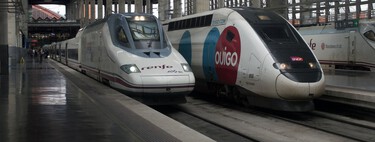
Iryo’s Struggles in the Spanish Railway Market
Iryo, the new player in the Spanish high-speed railway sector, is facing significant challenges in attracting clients. Despite having occupancy rates that surpass those of its competitors, Renfe and Ouigo, the company is struggling to turn a profit. With losses reaching 32 million euros in 2024 alone, following 79 million euros in losses during 2023, Iryo’s financial viability is in jeopardy. The company’s management believes the situation can improve, but they recently reached out to Italy for financial assistance .
Unprecedented Losses. The financial report for 2024 paints a grim picture for Iryo. While they are determined to achieve profitability , the operational reality is harsher than anticipated. Their hope for 2025 hinges on significant improvements in client acquisition, but the ability to fill trains currently poses a substantial hurdle. In November 2024, Trenitalia, their Italian parent company, increased its stake in Iryo from 45% to 51% , which offers an avenue for additional support and potential stability.
However, the race to attain profitability is challenging. Stakeholders like Air Nostrum and Globalia have committed to injecting an additional 15 million euros to mitigate ongoing losses this year. This financial push is part of a broader strategy that previously involved contributions of 44.7 million euros in April of last year and nearly 35 million euros in the summer of 2024.
Occupancy Challenges. One of the critical issues plaguing Iryo is its inability to attract passengers effectively. According to data reported by the CNMC, Iryo has recorded the lowest occupancy rates in the Spanish high-speed sector, raising red flags about its market viability. The statistics reveal that routes like Madrid-Barcelona and Madrid-Sevilla show occupancy percentages much lower than its competitors, reinforcing the need for strategic adjustments.
- Madrid-Barcelona: Occupancy 96.4% (Renfe 112%, Ouigo 99%)
- Madrid-Seville: Occupancy 83.2% (Renfe 93.3%, Ouigo 86.4%)
- Madrid-Málaga-Granada: Occupancy 82.2% (Renfe 93.3%, Ouigo 93.9%)
- Madrid-Valencia: Occupancy 70.2% (Renfe 73.3%, Ouigo 88.8%)
- Madrid-Alicante: Occupancy 66.6% (Renfe 75.9%, Ouigo 87.8%)
Iryo’s pricing strategy further complicates its standing in the market. In most corridors, Iryo’s ticket prices are higher than those of its competitors, Ouigo and Renfe’s AVLO service. Only on the Madrid-Alicante route does Iryo manage to undercut its competitors but only by a marginal margin.

Future Plans. Iryo aims to reverse its fortunes by focusing on expansion and operational efficiency. The company’s projections for 2025 include the introduction of new trains designed to increase capacity and establish a more attractive price point. With plans to make key adjustments to its services, Iryo is banking on new strategies that involve lowering ticket prices and optimizing operational costs associated with Adif fees.
Furthermore, Iryo’s CEO expressed hopes that expanding into Galicia might create new revenue streams. However, such plans face significant logistical complications, particularly concerning the availability of trains that can operate both on Iberian and international rail gauges. Currently, the necessary rolling stock to facilitate this is contracted to Renfe, limiting Iryo’s ability to provide services in this arena.
Industry-wide Difficulties. Iryo isn’t alone in its challenges. Competing firms, Ouigo and Renfe, also report substantial losses in the recently liberalized market. Ouigo received an additional 25 million euros from its parent company in France to help cover its mounting losses, which were over 40 million euros in 2024. Similarly, Renfe has struggled, with losses over 120 million euros in 2023, although the company has indicated it is on the path to recovery.
Despite these financial pressures , Renfe’s area of operations competing with Ouigo and Iryo managed to achieve modest profits, indicating that while the crisis is significant, there remain strategies for potential recovery. The competitive landscape for high-speed transport in Spain remains volatile, and all players must navigate a mix of financial constraints and customer expectations. New strategies, better management, and possible market adaptations may be critical in determining the long-term future of Iryo and other competitors in the landscape.
Photo | Trenduck
In conclusion, as Iryo navigates these turbulent times, the focus will be on strategic expansions, financial adjustments, and improved market competitiveness. The question remains: can Iryo turn its fortunes around in a rapidly evolving landscape, where both challenges and opportunities abound?