
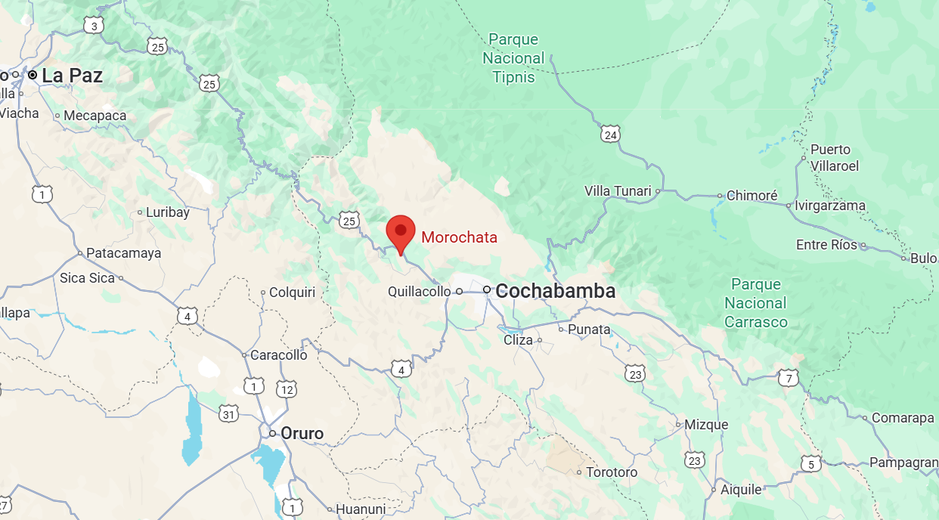
At least 16 people were tragically killed and 32 others injured after a passenger bus fell approximately 300 meters into a ravine in Morochata , located in the Cochabamba department of Bolivia. This devastating accident occurred on Monday, October 27 , and was reported by police officials, who are still conducting ongoing rescue operations in the area.
The accident took place in the morning hours, and authorities quickly arrived on the scene to begin their investigation. Fernando Aragon, an official from the Cochabamba traffic directorate, stated, “We have a preliminary report of 16 deaths ” along with 32 injuries resulting from the horrific event.
Initial reports indicate that authorities have only been able to recover three bodies , while the remaining 13 victims are still located at the scene. Omar Zegada, the head of national traffic, suggested that the driver may have “lost control of the vehicle,” which could explain the bus’s descent into the ravine.
A “Difficult to Access” Area
The rescuers faced significant challenges due to the location of the accident being in an area described as “difficult to access.” Authorities have yet to confirm whether the 23-year-old driver survived the incident, nor have they disclosed the total number of passengers traveling on the bus at the time of the crash.
Colonel Fernando Aragon commented, “This is one of the most complex cases, because it is a bus with passengers” in a remote area. This underscores the difficulties faced by emergency personnel attempting to reach individuals trapped or injured in the rugged landscape.
Road safety has been a critical issue in Bolivia, with statistics from the Interior Ministry revealing that around 1,400 people die on Bolivia’s roads each year. These fatalities are attributed mainly to driver recklessness and mechanical failures . Bolivia has faced severe traffic accidents in the past, including the most serious accident of 2025 , which occurred in March during the Carnival festivities. In that case, two buses collided head-on in Potosi , resulting in the deaths of 37 individuals .
The country’s mountainous terrain and often poorly maintained roads contribute to the increased risk of accidents. As Bolivians mourn the loss of life in this recent tragedy, the government faces renewed pressure to enhance road safety measures and implement stricter regulations for public transport services. Many citizens are calling for improved infrastructure and better training for bus drivers to prevent such catastrophic incidents in the future.
Reaction to this tragedy has been widespread, with expressions of condolences flooding social media platforms and local news outlets. Survivors and family members of the victims are left grappling with the aftermath of this disaster, drawing attention to the urgent need for safety reforms in Bolivia’s transportation system. As rescue operations continue, the need for comprehensive investigations into the causes of this horrific accident adds another layer of complexity to an already heartbreaking situation.
The lives lost in Morochata serve as a solemn reminder of the fragility of life and the imperative for change in how transportation safety is approached in Bolivia. This incident not only highlights the dangers associated with travel in remote areas but also raises questions about the government’s commitment to addressing the systemic issues plaguing its roadways.
As the investigation unfolds, it is critical for local authorities to prioritize safety and implement solutions to prevent similar tragedies in the future. The voices of those affected must be heard to ensure that the necessary changes are made to protect future generations.