
Thousands of kilometers from Japan, in an office building in Manila’s financial district, a group of young people monitors the operations of robotic arms that place drinks on refrigerated shelves in Japanese stores. These robots are perceived by many customers as fully autonomous; however, their independence is supported by these Filipino operators who, connected through the Internet, troubleshoot issues as they arise. When a can falls or a container is misaligned, it is these skilled individuals who restore control of the machinery.
The robotic systems supplying Japanese stores work independently most of the time . Yet, they encounter glitches, necessitating human intervention. When a drink slips or a container is misplaced, an operator in Manila dons a virtual reality headset and regains control. In just a few minutes, they meticulously maneuver the robotic arm until the issue is resolved. This type of intervention occurs in about 4% of operations , ensuring a smooth workflow that remains unnoticed by customers on the store floor.
When Robots Make Mistakes, It’s Humans Who Save Them
The success of this system is rooted in a unique partnership between companies from Japan and the Philippines. Telexistence , based in Tokyo, designs and manages the robots operating in Japanese retail environments, utilizing Microsoft and Nvidia platforms . Meanwhile, Astro Robotics in Manila oversees the control room where technicians monitor and assist these machines. This cooperation exemplifies how international collaboration can keep retail operations efficient through a fusion of robotics, connectivity, and a remote workforce.
At the core of this operation is the TX SCARA model , an agile and compact robotic arm engineered for the constraints of Japanese store warehouses. This system leverages sales data to determine which products require replenishment. In the event of an error, it seamlessly switches to teleoperation mode, allowing operators in Manila to resolve issues promptly.
Since the initial deployment of these robots in 2022, their presence has proliferated in Japanese stores. What began as a controlled experiment has evolved into a reliable operating system that ensures refrigerators are stocked consistently. The impetus for this automation is clear: Japan is grappling with a chronic shortage of retail workers , intensified by an aging population. Thus, automation serves as a strategy to maintain service levels without necessitating an expansion of the human workforce.
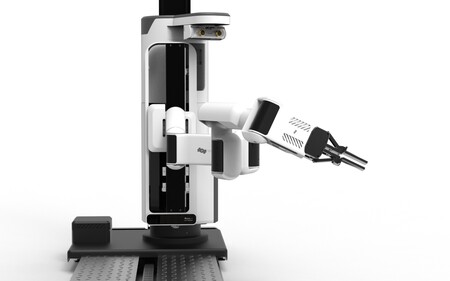
While Japan prides itself on advanced automation, a significant portion of this efficiency hinges on Filipino workers who earn between $250 and $315 per month , according to estimates. This compensation is roughly equivalent to that of a call center employee but entails significantly more technical responsibilities. For Japanese companies, this model presents an optimal solution: robots that don’t require breaks and remote operators at a fraction of the local minimum wage, thereby raising questions about inequality in this innovative landscape.
Though the operators’ tasks may appear straightforward, they are far from easy. Each technician supervises multiple robots and needs to react swiftly to any malfunctions. The pressure to maintain a constant workflow is substantial, and long shifts in front of a myriad of screens are common. Furthermore, the usage of virtual reality headsets can lead to dizziness and disorientation after prolonged use, a truth shared by an employee from the team.
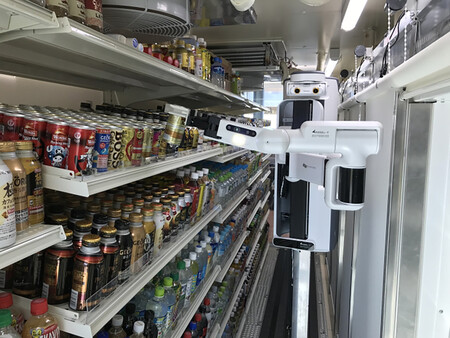
Each action performed by the operators in Manila not only sustains the system but also serves as a learning mechanism for the robots. Telexistence accumulates teleoperation data to refine the artificial intelligence models governing the TX SCARA. This data is instrumental in enhancing the robots’ coordination, grip, and responsiveness. In June, the company announced a collaboration with American startup Physical Intelligence aimed at developing foundational models that instill more human-like “physical intelligence” in these machines.
The surge in automation isn’t confined to Japan; it is part of a broader global trend where technological advancements are accelerating at an unprecedented pace. The market for “artificial intelligence agents” is projected to grow eightfold, reaching nearly $43 billion by 2030 , according to consulting firm MarkNtel Advisors.
The increasing demand for technical talent positions the Philippines strategically in the global market. A report by Penbrothers indicates that foreign companies are seeking cost-effective skilled labor for various projects in automation, artificial intelligence, and robotics. Local professionals have access to better job opportunities, yet they still earn significantly less than their counterparts in the United States and Europe.
As we look to the future, the potential of human-robot collaboration remains a significant area of exploration. Telexistence plans to increase the number of its connected stores and enhance the autonomy of its robots, while also experimenting with new handling systems. It will be crucial to observe how the necessity for human intervention evolves as robots become more capable, as well as how the data generated in Manila is handled—especially with regards to privacy and ownership of information.
Images | Telexistence
In Xataka | Amazon has calculated how much it costs to lay off 600,000 employees: 30 cents per item sold and many robots.