
Last April, Renfe began operating between Barcelona and Seville with a direct high-speed train. Without transfers, the company connects both cities in just under six hours, making some intermediate stops but offering a service that now does not require transfers. This initiative has transformed train travel across Spain, enhancing connectivity and accessibility.
Coinciding with the arrival of the Christmas season, Ouigo has announced its own service. This service features intermediate stops in Zaragoza , Madrid , and Córdoba , allowing passengers the flexibility to board or disembark at these locations. The total journey lasts just over six hours but presents some important changes compared to Renfe’s direct service.
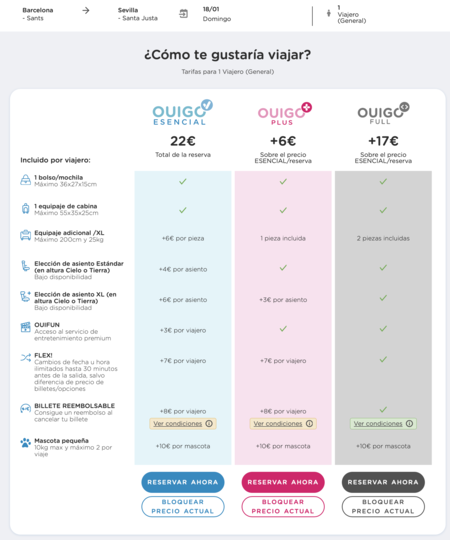
Ticket simulation between Barcelona and Seville for 22 euros
From Barcelona to Seville… passing through Madrid
Starting today, October 23, Ouigo has launched the sale of train tickets between Barcelona and Seville . This launch comes with an attractive offer allowing passengers to cover the entire line for just 22 euros . Prices can fluctuate, reaching up to 100 euros on peak days, but most currently available tickets range between 22 and 55 euros. This pricing strategy aims to attract budget-conscious travelers during peak holiday seasons.
The campaign is notably aggressive, designed to promote a new route intended to impact both Andalusian and Catalan corridors. Ouigo previously established its presence in the southern areas, optimizing ticket prices to cater to travelers’ preferences for affordability.

However, the exit of AVLO’s trains between Madrid and Barcelona gives Ouigo a fresh opportunity. It offers a new train that departs from the Catalan capital shortly after 7:35 a.m. and arrives in Seville before 1:51 p.m. Within six hours and 16 minutes, passengers can transition between these vibrant cities at impressively low prices. This new service amplifies the options available for travelers during the upcoming holiday periods.
Additionally, Ouigo’s strategy is bolstered by the fact that its high-speed train makes earlier stops in Zaragoza , Madrid , and Córdoba . This service extension, albeit longer, adds a layer of accessibility for many travelers who frequent these locations. This is particularly beneficial for those who may not need to travel directly from Barcelona to Seville but appreciate a more comprehensive travel option.
So, where does Ouigo find its advantage? The integration of this new train allows Ouigo to remain competitive in the high-speed sector between Madrid and Barcelona without substantially increasing operational demands. Conversely, Renfe might face challenges in optimizing its service between the Catalan and Andalusian cities because of its direct options, which focus on saving time while sacrificing the broader travel experience.

In comparison, the AVE offers a significantly quicker connection. Since launching this route that bypasses Madrid , travelers can journey between Barcelona and Seville in just five hours and 37 minutes, effectively saving around 40 minutes over Ouigo’s service. This speed advantage positions Renfe as a leader in direct routes, but at a premium cost.
This emerging high-speed train rivalry underscores a critical juncture in Spanish rail transport. While Renfe focuses on delivering the quickest services at higher prices, Ouigo presents a more economical alternative with slight compromises on travel time. This duality reflects evolving passenger needs and preferences in the world of transportation, spurring competition that ultimately benefits travelers.
Photo | Tania Mousinho and Pourya Gohari
In summary, the Spanish high-speed rail market is becoming more dynamic with both Renfe and Ouigo competing for customer preference, ultimately resulting in better service and rates for passengers.