
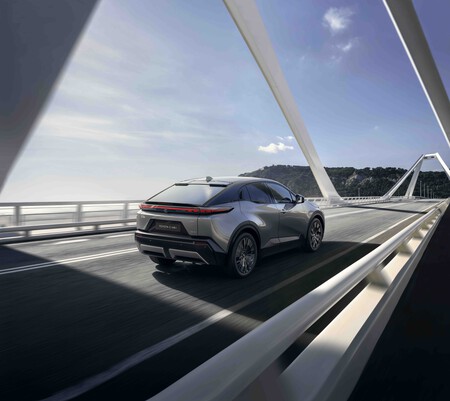
Toyota has notably remained out of the electric vehicle (EV) market for quite a while, opting instead for a strategy rooted in hybrid technology . The company’s approach revolved around customizing its offerings to align with market expectations. However, this strategy has not been without its challenges. The much-anticipated Toyota bZ4X , the brand’s first foray into fully electric vehicles, has experienced limited reception due to notable issues, including serious wheel-related problems that led to significant recalls. Additionally, its high price relative to its range further hampered its standing with consumers.
Now, Toyota aims to reposition itself in the EV landscape. Riding on the wave of growing electric vehicle adoption in Europe and a recent update for the bZ4X that has boosted its sales, Toyota introduces a new electric vehicle that targets the desires of modern consumers: a compact size, reasonable pricing , and a battery that promises impressive autonomy.
Technical Data of the Toyota C-HR+
| Feature | Toyota C-HR+ |
|---|---|
| Body type | Five-seater SUV |
| Measurements and weight | 4,520 mm long, 1,870 mm wide, 1,595 mm high. Wheelbase of 2,750 mm |
| Trunk | 416 liters |
| Maximum power | 224 hp |
| WLTP consumption |
|
| Environmental distinctive | Zero emissions |
| Driving aids (ADAS) | Mandatory by the European Union. Includes door opening alert, proactive driving assistance, adaptive cruise control with automatic braking, and dynamic light assist |
| Others | 7-inch and 14-inch central instrument panel, infotainment system compatible with Android Auto and Apple CarPlay (wireless), double wireless charger |
| Electric hybrid | No |
| Plug-in Hybrid | No |
| Electric |
Both versions feature a 77 kWh battery (72 kWh usable) |
| Price and launch | Now available. Deliveries begin in Q1 2026:
|
The Anticipated Electric Toyota
The new Toyota C-HR+ marks a significant evolution in the brand’s design philosophy. While it retains a familiar aesthetic akin to its hybrid predecessors, it also sports enhanced dimensions, extending to 4.52 meters in length. The vehicle remains 1.87 meters wide and increases in height to 1.60 meters . The wheelbase has been lengthened by 11 centimeters to 2.75 meters , resulting in more interior space, a crucial factor for family vehicles.
Like the bZ4X, the Toyota C-HR+ utilizes the e-TNGA platform but is designed with a 77 kWh battery consisting of 72 kWh usable capacity paired with two electric motors. The front-wheel drive variant comes equipped with a single motor generating 165 kW (224 HP) , boasting an expected range of up to 609 kilometers . According to Toyota, this model anticipates an impressive consumption rate of 13.8 kWh/100 km . Meanwhile, the all-wheel drive option features dual motors that aggregate to 252 kW (343 HP) and offers a range of up to 500 kilometers with a consumption of 15.4 kWh/100 km .
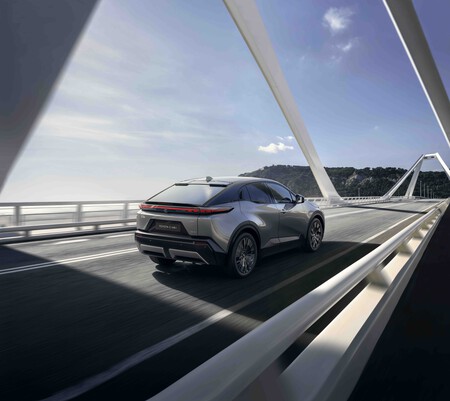
When considering long-distance journeys, the single motor setup should theoretically allow for ranges exceeding 400 kilometers without recharging, while the dual motor setup should deliver closer to 350 kilometers . Charging capabilities include direct current options of up to 150 kW , allowing for rapid charging times of around 30 minutes for an 80% battery fill, while alternative current charging is possible at 11 kW for the single motor and 22 kW for the dual motor version.
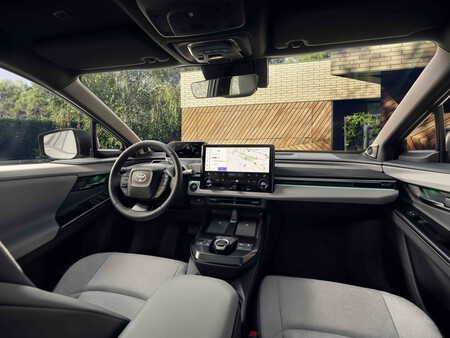
The interior design emphasizes modern tech with a 7-inch instrument panel , complemented by a 14-inch central screen that supports both Android Auto and Apple CarPlay . Higher trim levels feature an 800W JBL sound system with a nine-inch subwoofer and eight speakers , catering to audio enthusiasts.
In terms of safety and convenience, the vehicle encompasses a variety of Toyota Safety Sense features—such as a blind spot detector, automatic light control, emergency braking, and parking sensors. The higher trim adds cyclist detection, lane change assistance, and a 360º camera system. Further enhancing safety are door-opening alerts with illuminated handles when approaching vehicles are detected.
Availability for the new Toyota C-HR+ is set for the first quarter of 2026 , with prices starting at 36,500 euros for the Advance model and 44,000 euros for the Spirit version before any incentives.
In summary, Toyota’s C-HR+ emerges as a compelling contender in the evolving electric vehicle market, offering consumers an attractive blend of technology, performance, and affordability designed to meet contemporary driving needs.