
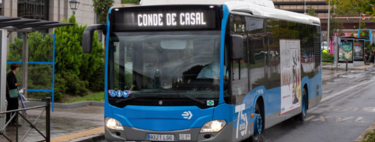
The Spanish bus map is undergoing significant changes . With routes that lack profitability, corridors that remain largely unused, and companies advocating for complete liberalization of the bus sector, the landscape is shifting. Spain finds itself at a crossroads, striving to protect its national transport services while responding to European regulations.
What’s happening? Currently, Spanish regulations stipulate that a company involved in passenger bus transport is not permitted to conduct international trips with stops within Spain to pick up or drop off travelers permanently. This restriction is meant to safeguard national routes by allowing such services only on a temporary basis. For example, if a company were to establish a route from Lisbon to Paris , it couldn’t pick up or drop off passengers at key stops in Spanish cities like Madrid or Barcelona . Allowing this would present a direct challenge to domestic operators that have been allocated those corridors.
How do buses work in Spain? Spain employs a concessional model for its bus lines. This involves a tendering process where a broker invites companies to submit competitive proposals based on pricing. The most favorable offer secures the concession and begins operations for an agreed period. While this system ensures the stability of transportation during the concession period, critics like FlixBus argue that it stifles competition and hinders companies from adapting to evolving market dynamics.
One significant issue is that some bus lines operate under expired concessions or have never been opened for tender, particularly in areas where high-speed railways provide competing transportation options. This situation primarily affects residents in towns that rely on intermediate bus stops, leaving them disadvantaged and with limited access to transportation.

And what about international travel? Europe has been pushing for the liberalization of international travel, mirroring the changes seen in the rail sector. Despite initial discussions of moving towards a more competitive model, Spain is determined to maintain its concessional system but with necessary amendments to adapt to current realities.
This model effectively prevents companies from engaging in cabotage , where they can pick up and drop off passengers within the country along an international route. Companies like Avanza and Alsa defend this system based on a recent ruling by the *Court of Justice of the European Union* that favored Denmark in a similar post. They argue that this ruling is critical for protecting national interests.

What has happened in Denmark? Denmark imposes regulations on occasional bus services allowing cabotage for a maximum of seven calendar days within a month. These rules are mirrored in parts of France, leading to bureaucracy surrounding bus services across Europe. The European Commission has raised concerns about this practice, asserting that it violates community rules, prompting discussions at various levels.
However, these regulations are directed at ensuring that foreign companies don’t compete unfairly with national firms by offering services that could be construed as camouflaged mandatory routes. In the case of Denmark, the Court of Justice of the European Union has concluded that while Denmark does regulate cabotage, it does not completely ban it.
Implications in Spain? Agencies like FlixBus challenge the notion that these regulations affect their operations. They maintain that the existing cabotage restrictions do not align with the dynamics of regular and international routes. For instance, a route proposed by FlixBus from Trier in Germany to Madrid, with intermediate stops in Zaragoza and Barcelona, highlights the potential benefit of having more flexible routes for passengers.
Despite efforts to open up these international connections, Spain has thus far placed numerous obstacles in the way of new entrants to the market. The recent Sustainable Mobility Law , which came into effect on October 8, 2025, eliminated Article 50, which had previously allowed certain routes to emerge under competitive conditions.
The ongoing debate centers on striking a balance between maintaining a protective framework for national companies and granting them the flexibility to adapt to a rapidly changing market. As debates continue, Spain finds itself needing to comply with European obligations while also preserving the interests of its domestic transport services.
Photo | FlixBus and Eleazer Glez
In Xataka | Until a few years ago, the towns between Madrid and Valencia had trains and buses. Now they only have one problem: the AVE.