

Exploring Hangzhou: China’s Emerging Tech Powerhouse
Hangzhou, a city renowned for its beautiful West Lake and vibrant culture, has rapidly transformed into a technology hub. Located just 180 kilometers south of Shanghai, this city with a population of 12 million has become home to a remarkable array of powerful technology companies, including the giant Alibaba and six notable startups known as the ‘little dragons.’ What sets Hangzhou apart from other tech giants like Silicon Valley is its unique ecosystem that does not rely on abundant venture capital, leading universities, or robust industrial structures. Instead, it has forged its own path, creating a distinctive model for technological advancement.
Understanding the Context: Investment Trends in Hangzhou
Despite the plummeting venture capital investments in China—dropping from $88.42 billion in yuan to just $5.38 billion by 2024—Hangzhou has surprisingly emerged as a place of technological innovation. Research indicates that venture capital funds have significantly declined, with funds in dollars collapsing from $17.32 billion to a meager $750 million. However, Zheijang province, where Hangzhou is located, gained attention last year with the establishment of 41 new corporate venture capital funds, a surge that followed the national recognition of companies like Unitree and Game Science.
Educational Landscape: The Role of Universities
While Hangzhou has seen some level of success, it is worth noting that the city boasts only one elite university, Zhejiang University. In comparison, Beijing has 26 elite institutions, and cities like Jiangsu and Shanghai have 11 and 10, respectively. The admission rates further illuminate this disparity. For instance, the admission rate for the prestigious Tsinghua University in Beijing for local students is approximately 0.85%, while Zhejiang University admits only 0.09%.
Interestingly, the founders of many successful ventures in Hangzhou, including Alibaba, did not emerge directly from academic incubators. Jack Ma, Alibaba’s co-founder, faced rejection from numerous job opportunities after completing his education. The narrative that education is the sole pathway to success is debunked by these stories of resilience and entrepreneurial spirit.
The Innovator’s Mindset: Flexible Governance
According to Zilan Qian, a researcher at the Oxford China Policy Lab, Hangzhou’s success can be attributed to its “flexible governance.” Rather than imposing stringent regulations that stifle innovation, local officials adopt a mentality akin to waiters and babysitters, allowing businesses to flourish without undue interference. This contrasts sharply with the more controlling tendencies often witnessed in larger cities like Beijing and Shanghai.
Hangzhou’s political and geographical context plays a crucial role in its technological evolution. It lacks the political and financial clout of first-tier cities, allowing it greater autonomy to carve out its niche in the tech industry. The city adopted a market-oriented approach while still maintaining a level of centralized governance. The Hangzhou government actively focuses on quality of life as a means to attract businesses and talent, promoting an environment conducive to innovation.
The Triangular Interaction of Technology Hubs
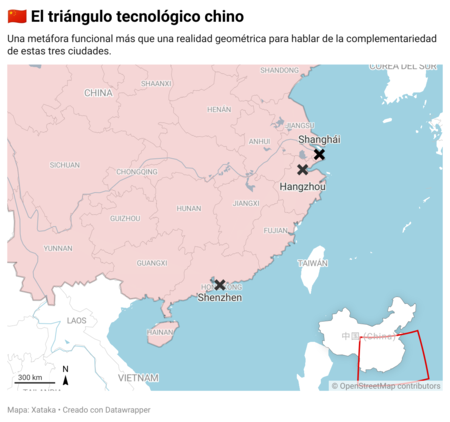
Hangzhou is a prominent vertex in what is sometimes referred to as the “Chinese Technology Triangle,” which also includes Shenzhen and Shanghai. Each of these cities specializes in different sectors that complement one another:
- Shenzhen: Known for its industrial capacity and hardware production.
- Shanghai: Focused primarily on finance and internationalization.
- Hangzhou: Emerging as a leader in the internet and artificial intelligence, fostering a favorable ecosystem for private enterprises.
This triangular relationship enhances collaboration and facilitates the flow of talent across regions. It creates a rich environment that nurtures the growth of innovative companies, enabling them to thrive in a competitive landscape.
Future Prospects: Balancing Innovation with Governance
As Hangzhou continues to expand its influence as a tech center, the intricate balance between entrepreneurial freedom and government oversight will be critical. While the local government promotes a facilitative role, skepticism remains about whether this is true autonomy or a more covert form of state control.
This innovative approach has allowed companies like DeepSeek to emerge, which made waves in January with its groundbreaking technology. Yet, critics argue that the city’s lack of state-backed research institutes and a strong industrial base has led to a more humble governmental attitude, which could stifle its future growth if not handled adeptly.
In essence, while Hangzhou may not fit the traditional mold of a tech giant, its unique blend of perseverance, flexible governance, and collaborations is making it a notable player on the world stage. As it evolves, the narrative of “Alibaba City” or “DeepSeek City” suggests that the future is ripe for innovation, pushing the boundaries of what a tech hub can achieve.
In conclusion, Hangzhou exemplifies how a city can foster innovation despite lacking conventional resources. Its experience serves as a blueprint for other emerging cities aspiring to make their mark in the global technology arena.