
The recent history of Christianity in China is a complex narrative shaped by a myriad of political and social factors. From the Cultural Revolution , which drastically suppressed religious practices, to the latest waves of repression orchestrated by Xi Jinping’s government, the evolution of Christianity in this vast nation has seen significant challenges. Nonetheless, experts generally agree that in recent decades, the Christian faith has experienced substantial growth in various regions of China.
Interestingly, this growth has led some scholars to assert that, in the near future, China may become the largest Christian nation in the world. Numerous studies indicate that the number of Christians in the country could be as high as 100 million , marking a significant shift in a nation traditionally dominated by Buddhism and Taoism .
How Many Christians Are There in China?
Determining the exact number of Christians in China is more complicated than one might expect. According to the China General Social Survey , the percentage of Chinese adults identifying as Christians—encompassing both Catholics and Protestants —hovered around 2% between 2010 and 2018. However, varying estimates have emerged, suggesting figures ranging from 3% to 9% of the total Chinese population, which is approximately 1.4 billion .
For instance, in 2020, The Economist reported that Protestants alone constitute about 3% of the population, while acknowledging that unregistered, clandestine churches could significantly raise this number. The complexities in gauging accurate statistics arise from multiple sources reporting different figures, compounded by ongoing information control from the Beijing government . The Pew Research Center elaborates that differing terminologies and concepts of religion in Eastern contexts make it challenging to create cohesive data.
</div>Distribution of Christians in China
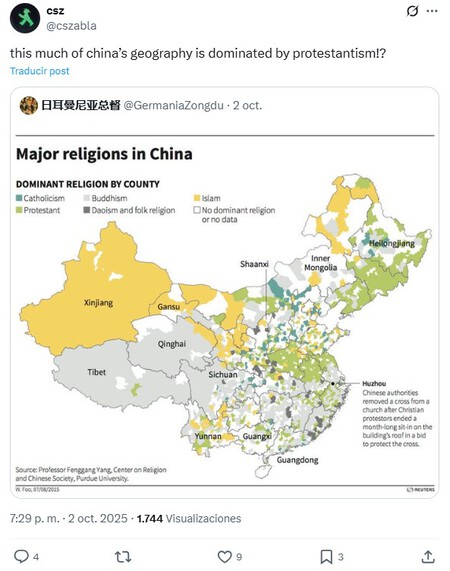
Another interesting aspect of Christianity in China is its distribution across various regions. A study conducted by Professor Fenggang Yang reveals that Buddhism typically prevails in southern and southwestern parts of the country, whereas Protestantism is highly concentrated in the eastern regions. Areas like Zhejiang Province have seen substantial growth in Christian communities despite facing significant obstacles from local authorities.
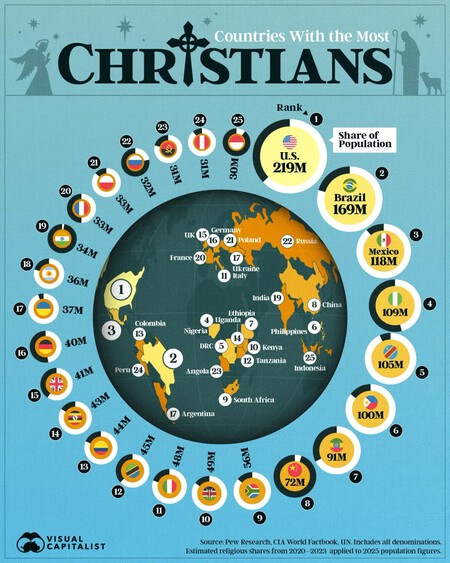
As of recent years, estimates regarding the total Christian population vary widely. Research indicates numbers ranging from 40 million to as many as 100 million across different organizations. The Protestant demographic constitutes about 90% of the Christian community, suggesting a dramatic surge in this faith amidst governmental pressures. Ultimately, even the most conservative estimates demonstrate that China’s Christian population easily exceeds those of traditional Christian countries like Germany , France , and Spain .
</div>Future Growth of Christianity in China
Experts predict that Christianity will continue its trajectory of growth in China. Professor Yang forecasts that by 2030 , a staggering 224 million Protestants could reside in China, propelled by a consistent annual growth rate of around 7% . This speculation suggests that in just a few years, China may not only surpass but fundamentally transform the global landscape of Christianity.
However, not all predictions are equally optimistic. A 2023 Pew Research study indicates signs of stabilization in the Christian population, suggesting that growth is less consistent than previously perceived. This discrepancy highlights the difficulties in accurately capturing the reality of faith in a tightly controlled societal climate , where many believers may hesitate to express their spiritual affiliations openly.
The Christian community in China is thus a fascinating phenomenon, encapsulating a story of resilience amid adversity. As the nation grapples with shifting dynamics of faith and governmental authority, the future of Christianity in China remains a subject of immense interest and importance for both scholars and religious believers worldwide.