
The Rising Threat of Drones in Europe
European nations are grappling with an unprecedented wave of aerial vulnerabilities. In recent months, there has been a surge of unidentified drone incursions that have disrupted air traffic, particularly in Germany, where incidents have increased by a staggering 33% within a year. These raids have led to grounded flights and significant security alerts, prompting governments to reconsider their defense protocols regarding airspace violations.
Despite the absence of a formal declaration of war, these incursions are viewed as part of a broader destabilization strategy , potentially orchestrated by Russia. This encompasses not only aerial incursions but also cyberattacks and sabotage efforts aimed at probing the limits of NATO’s reaction capabilities and testing European defense measures without escalating to open conflict.
Germany’s Legal Transformation
In response to these challenges, Germany has recently adopted a radical shift in its defense doctrine. Previously, authorities were relegated to merely detecting drones, but the escalation of drone-related incidents —which even halted operations at Munich Airport—has catalyzed significant legal reforms. The German government, under Chancellor Friedrich Merz, has progressed a bill that allows federal police to shoot down drones violating German airspace or posing direct threats.
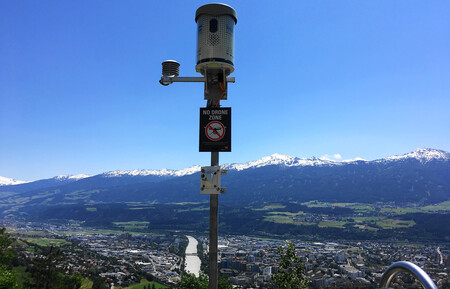
The approval of this law marks the first modification of Germany’s police statutes since 1994, and positions the country alongside France, the UK, Lithuania, and Romania—nations that already permit the active neutralization of drones. This new law enables the police to use various means, including kinetic shots, laser weaponry, and electronic jamming systems, to address aerial threats. Furthermore, a national anti-drone unit is set to be established to specifically handle low-altitude drones, while more powerful devices will remain under military jurisdiction.
A Balancing Act of Security
The enactment of this legislation underscores a critical dilemma facing Europe: how to effectively counteract Russian hybrid aggression without provoking an escalation of hostilities. Many of the drones observed appear to be unarmed and conducting reconnaissance, yet they carry strategic implications that cannot be ignored. Interior Minister Alexander Dobrindt has emphasized that urban operations must adhere to principles of proportionality to prevent collateral damage, creating a constant tension between decisive action and caution.
This delicate balancing act is reflective of a larger trend in European defense strategy. As Germany enhances its military capabilities with advanced systems like the Rheinmetall Skyranger , designed to neutralize drone swarms, it simultaneously seeks to strengthen its collaboration with NATO in anticipation of potential escalations along technological and political fronts.
The Geopolitical Landscape
Recent incidents in Poland, Estonia, and Romania, where Russian drones and MiG-31 fighters have encroached upon allied airspace, have prompted NATO to reassess its rules of engagement. Countries on the eastern front, buoyed by support from both France and the UK, are advocating for a more assertive posture, including the possibility of allowing pilots to engage without visual confirmation and arming surveillance drones.
This discourse has unveiled a rift between European caution and American assertiveness , especially as Washington pushes for more aggressive response measures. The question remains whether active deterrents are necessary to counteract Russia’s aerial provocations amidst the ongoing conflict in Ukraine. This underscores a profound shift in how Europe views warfare in the modern era, increasingly encompassing asymmetrical tactics that blend technology with traditional military approaches.
Building a Robust Defensive Stance
As NATO refines its engagement protocols, the European Union is simultaneously pursuing a stronger autonomous defense strategy. President Ursula von der Leyen has advocated for a unified “drone wall” —a network of sensors, radars, and deterrents designed to safeguard the continent’s eastern front against hybrid threats. The EU is also examining sanctions against Russian diplomats implicated in sabotage operations, all while channeling funds towards anti-drone systems at key infrastructure points like airports and power plants.
This strategic pivot not only aims to enhance physical security but also seeks to counteract Russia’s efforts to undermine unity within the EU. Von der Leyen has made it clear that the bloc’s response must be characterized by cohesion and proactive deterrence rather than mere reaction.
Europe’s evolving military landscape underscores the reality that modern warfare transcends conventional means, encompassing algorithms and information warfare alongside traditional arms. Germany’s recent legislative changes, NATO’s adjustments on the eastern front, and the initiatives rolled out by the EU illustrate a continent determined to adapt to the multifaceted threats posed by a rapidly evolving global environment. As the crisis in Ukraine continues to shape geopolitical norms, Europe’s journey from pacifism to pragmatism marks an essential chapter in its ongoing struggle for security in an increasingly uncertain world.