
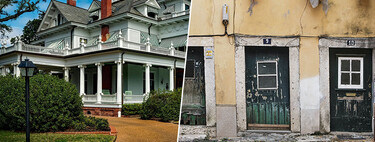
Disparities in Spain: A Tale of Two Cities
On the streets of Spain , the standard of living can change radically from one block to another. The environment that a person encounters when leaving home—from the vehicles parked nearby to the variety of shops—paints a vivid picture of a deeper, more complex socio-economic reality. These everyday differences reflect, in stark terms, how geographical location shows a significant correlation with the economic level and well-being of its inhabitants.
The published statistics released this week by the Tax Agency reveal a growing gap that trends across cities and neighborhoods. This data underscores a crucial point: wealth and poverty seldom coexist within the same postal code.
Where Wealth is Concentrated
The richest neighborhoods in Spain are predominantly located in the residential outskirts of bustling urban centers like Madrid and Barcelona . La Moraleja, situated in Alcobendas, Madrid , continues to top the list, recording an average gross income of 196,429 euros . Following closely are Ciudalcampo and Fuente del Fresno, both in San Sebastián de los Reyes, with average incomes of 121,838 euros and 108,354 euros , respectively.
Outside the capital, the Vallvidrera-Tibidabo i Les Planes neighborhood in Barcelona holds the fourth position with an average income of 107,513 euros . Additional neighborhoods in Barcelona, such as Muntaner (106,734 euros) and Pedralbes-Sarrià (104,963 euros), complete the rankings. Moving beyond these two cities shifts the average gross income significantly down to 81,807 euros in Valencia ‘s Massarrochos-Santa Bárbara neighborhood.
The Neighborhoods with the Least Income
At the opposite end of the spectrum, Torreblanca in Seville showcases the stark realities faced by lower-income neighborhoods. According to 2023 records by the Tax Agency, this neighborhood reported the lowest average gross income in Spain, merely 11,354 euros annually. Notably, this figure represents some improvement over previous years. However, the chasm between the highest and lowest average income neighborhoods is appalling, amounting to over 185,000 euros .
Other neighborhoods that mirror these struggles include Nou Alacant (Alicante, 16,868 euros), Cortijos de Marín (Roquetas de Mar, Almería, 17,210 euros), Carrús-Plaza Barcelona (Elche, 17,670 euros), and Ciudad Jardín (Alicante, 19,000 euros).
Analyzing this data reveals the striking gap between the high-earning and low-earning neighborhoods. The income disparity amounts to an astonishing 185,000 euros on average between La Moraleja and Torreblanca.

Origin of Wealth in the Neighborhoods
The nature of wealth varies significantly depending on the neighborhood. Only 58.55% of the income from residents in affluent neighborhoods originates from salaries. In contrast, 17.79% stems from capital gains, while 10.68% is attributed to economic activities and 11.53% from other capital revenues.
For neighborhoods with lower average income, there is a heavier reliance on labor income, with limited opportunities for passive or property income generation. In Torreblanca, for example, salaries comprise 75.18% of total declared income. Meanwhile, capital income barely reaches 0.22% , economic activities yield 1.83% , and capital gains are merely 0.47% .
Wealth and Poverty in the Shadow of Big Cities
Widening the lens reveals that municipalities with the highest average incomes are mainly concentrated in Madrid and Catalonia . Pozuelo de Alarcón in Madrid remains the wealthiest municipality in Spain, boasting an average income of 88,011 euros in 2023, reflecting a 3.15% increase from the previous year. Boadilla del Monte and Sant Just Desvern follow, with average incomes of 70,869 euros and 67,265 euros , respectively.
Conversely, municipalities at the lower end of the income scale are primarily found in Andalusia and Extremadura . For instance, Benamargosa in Malaga has the lowest average income, recorded at just 13,831 euros . Other municipalities, such as Guadahortuna and Colomera in Granada, hover around 14,000 euros . The gap between Pozuelo de Alarcón and Benamargosa is a staggering 74,180 euros , emphasizing that economic inequality remains deeply entrenched across different regions of the country.
For those who look to understand these divides, the published data presents a stark portrayal of Spain’s economic landscape . It serves as a reminder of the dire realities faced by many and the glittering wealth enjoyed by a fortunate few.