
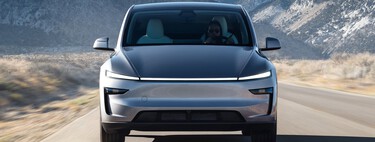
The Challenge of Creating a Sub-€25,000 Tesla Electric Car
“If they throw an electric car of 25,000 euros, they would be lined.” This phrase often surfaces in discussions about Tesla’s market position. While it sounds straightforward, the reality is far more complicated. Tesla cannot simply introduce a budget-friendly electric vehicle (EV) because the economics do not favor it. This situation is primarily due to Tesla’s production model and the inherent challenges associated with keeping costs down without compromising quality and performance.
To summarize: NSLC —Neither. This is the definitive answer for those expecting an affordable Tesla electric vehicle. The introduction of Standard versions of Tesla models signals a shift in the company’s strategy to engage in more competitive pricing, but it remains far from the anticipated €25,000 vehicle that many have hoped for.
Up to now, Tesla has thrived on a familiar formula: no one offers more range for less money. This approach has proven successful, especially when combined with the company’s extensive charging network . However, competition is intensifying. Rivals from Europe and South Korea, like the Kia EV3 , are beginning to offer similarly priced vehicles. While these models may be smaller, they resonate with the European market, where customers often prefer compact cars over larger options measuring 4.70 meters or more.
<img alt="Elon Musk described the Tesla as $ 25,000 as a 'absurd idea'. Now he needs it to compete in China" width="375" height="142" src="https://i.blogs.es/64bc55/tesla-model_y-2025-hd-fbf9515e1bb19728a936402c63203021e12a06c72/375_142.jpeg"/>Indeed, the Tesla Model 3 remains a leader, but the anticipated €25,000 version has yet to materialize. Though Tesla has designed its success around sleek and minimalist aesthetics, this approach has also trapped it in a financial conundrum. The auto industry typically experiences vehicle life cycles ranging from six to eight years, with aesthetic updates required every four to five years to maintain market interest .
If Tesla aims to be the “Campbell’s Soup” of cars—simple and appealing—it must navigate the challenges of production economics. The initial investment in specialized machinery is substantial, and once operational, any modifications can significantly increase costs. Consequently, the chassis design must remain largely unchanged, limiting innovation and enhancements while imposing stringent financial constraints.
<img alt="We have been waiting for a tesla of 25,000 euros for years: these reasons have led Elon Musk to bet on the robotaxi" width="375" height="142" src="https://i.blogs.es/d3dce1/robotaxi_84/375_142.jpeg"/>Batteries remain the primary cost driver in electric vehicles. Although the prices of raw materials have decreased, Toyota’s 1:6:90 rule underscores its preference for hybrids over full electric cars. For the same investment into an electric battery, Toyota can produce 90 hybrid vehicles versus just six plug-in hybrids. Tesla’s initiative to develop 4680 batteries has shown promise, but it hasn’t solved the economic challenges of producing smaller models, since these batteries need to achieve a satisfactory energy density to ensure effective performance.
Currently, anyone considering a €25,000 electric car likely understands the limitations involved. With a battery size capped at around 50 kWh, these vehicles would struggle to exceed 300 kilometers per charge. Such constraints directly contradict Tesla’s core value proposition of delivering maximum range at competitive prices.
Recent results indicate that Tesla is rapidly losing market share. In China , competitors are emerging with more advanced software solutions, while in Europe , manufacturers like Volkswagen are ramping up their efforts, turning the competition fiercer than ever. Elon Musk’s controversial political sentiments in Germany haven’t improved the company’s image, alienating potential customers in key markets.
While it’s easy to argue that Tesla could launch a lower-cost model and dominate the market, numerous factors complicate such decisions. The company has sought to simplify vehicle design with larger parts but has yet to succeed significantly. It also hasn’t effectively reduced costs related to batteries, which account for a substantial portion of the overall vehicle expense. Moreover, Tesla would require expanded facilities to mass-produce these potential vehicles, which poses logistical challenges and financial risks.
As it stands, Tesla is still a relatively young player in the automotive industry with only four models currently on offer. Despite an impressive delivery record of 1.81 million cars in 2023 , the path forward is fraught with obstacles as the company seeks to innovate while managing production costs. These complexities illustrate why the highly anticipated €25,000 electric car remains elusive.
All evidence points to one conclusion regarding Tesla’s endeavor to release a €25,000 electric car: it’s simply not feasible at this time. As counterintuitive as it may seem, the economics of production coupled with market dynamics reveal that there are significant hurdles to overcome. Until Tesla can resolve these issues, the dream of an affordable Tesla remains just that—a dream.