
The Great Resignation: A New Era in Spain’s Labor Market
In 2022, a significant turning point emerged in the labor market in Spain, marked by the phenomenon known as the Great Resignation. Thousands of employees chose to leave their current positions in search of better salary or work-life balance options. This trend has continued to escalate, and as of 2025, it is projected that Spain will hit a historic record with over three million voluntary resignations.
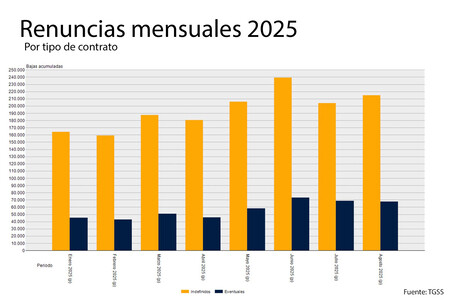
According to the data published by The Newspaper, the number of employees resigning has seen a steady increase. In 2024 alone, the General Social Security Regime recorded 2,886,670 voluntary withdrawals , indicating a growth of 4.4% compared to 2023 . This number is more than double what was recorded a decade ago, showcasing the dramatic shift in employment patterns within the country.
Understanding the Trend of Voluntary Resignations
The voluntary resignation data paints a compelling story. As of the first eight months of 2025, the two million threshold of resignations has already been surpassed. Experts predict that the year will conclude with over three million resignations, representing a significant cultural and economic shift. “The better the economy performs, the greater the propensity to change jobs,” remarked Yésika Aguilar, director of labor relations at Foment del Treball, in an interview with Levant.
This shift does not occur in a vacuum. It reflects deeper changes in the workplace culture and the values of contemporary workers. Individuals increasingly seek stability , well-being , and a good work-life balance, often prioritizing these aspects over traditional job security. Conversely, companies face a shortage of qualified workforce, making it untenable to lose trained employees.
Economic Crises and their Impact on Worker Behavior
The landscape of the Spanish labor market has been significantly altered by successive economic crises, prompting companies to implement strict cost-cutting measures. These measures often included the reduction of seniority bonuses and other incentives aimed at retaining long-term employees. The lack of job security has driven workers to frequently switch jobs in pursuit of better working conditions and remuneration.
This underlying tension has contributed to a climate where workers feel less attached to their current jobs. The traditional ties that once characterized employment relationships have weakened, leading to an environment where employees prioritize their own welfare and opportunities for growth.
The Rise of Precarious Employment
Much of the increased resignation rate can be tied to job insecurity. Surprisingly, many of the highest resignation rates are among those with indefinite contracts. As Oriol Cremades, a labor law professor at UAB, noted, “There is a greater rejection of the toxic aspects of work, and employees are now valuing work-life balance more than ever.”
Temporary contract workers often face a different set of challenges. Low wages, minimal pay increases, and short contract durations compel many to leave for more stable jobs with better compensation. As a result, the elimination of benefits such as bonus structures has further disincentivized long-term employment for many workers.
Generation Z and Workplace Dynamics
A pivotal element in this ongoing shift is the emergence of Generation Z in the workforce. This generation places a higher value on work-life balance, mental health, and overall job satisfaction compared to previous generations. Their priorities often diverge from traditional measures of success, such as job stability and economic incentives.
A recent report by Alan in 2025 found that 40% of Spanish employees are considering quitting their jobs due to emotional exhaustion and stress, underscoring the necessity for workplaces to adapt to the changing needs and values of their workforce. Employees today are actively seeking environments that provide not only satisfactory remuneration but also flexibility and a sense of well-being.
The rise in voluntary resignations is a multifaceted phenomenon reflecting broader cultural shifts and economic realities. As the labor market evolves, both employees and employers must adapt to the changing landscape, emphasizing a more integrated approach to job satisfaction, workplace culture, and human well-being.