
In South Korea, the surveillance of heaven is a constant task that is never terminated. The missile tests and the use of low-flying drones by the North have highlighted the need to reinforce detection systems. Radars on land, conditioned by the country’s geography, do not always offer the necessary coverage against threats that seek to go unnoticed. To respond to that challenge, Seoul has decided to bet on a new generation of Early Alert Planes capable of expanding surveillance and ensuring more stable control of its airspace. It is not just about incorporating technology but ensuring that the country has sufficient means to anticipate any scenario.
The search for a new early alert plane started in 2020 when the Defense Procurement Agency (DAPA) approved the second phase of its AEW & C program. By then, South Korea already had four E-737 Peace Eye acquired from Boeing in 2006 and delivered in 2012, but the experience had made it clear that they were not enough. Parliamentary documents revealed in 2019 indicated availability problems and technical failures that prevented maintaining the planned patrol rate. To that limitation was added the pressure of an increasingly complex strategic environment, marked by the expansion of the North Korean arsenal.
A Jump in the Air Surveillance Strategy
Seoul has opted for an unusual combination until a few years ago: an executive reactor Bombardier Global 6500 equipped with the radar The/W-2085 developed by Elta. This system, with active electronic exploration antennas on the sides and additional sensors in the nose and tail, allows monitoring in all directions, promising a much greater scope than that of conventional radars. With this model, the country is looking for a more compact platform and with operational costs contained compared to larger solutions.
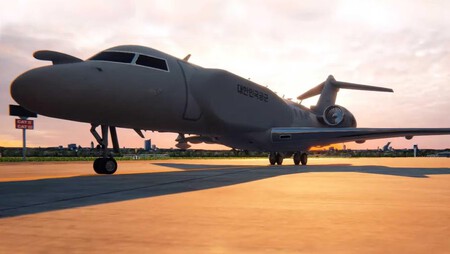
Conceptual Image of Global 6500 for South Korea
The contest was marked by a struggle between two proposals that started from the same base plane, the 6500 global. L3Harris offered to integrate it with the radar The/W-2085, while the European Saab presented its GlobalEye solution, equipped with the radar Erieye Extended Range. DAPA’s evaluation concluded that there were no major differences in technical performance, but in other aspects. As the agency explained, the American proposal received more points in operability, maintenance costs, and contribution to the local industry, while the Swedish firm stood out in price and contractual conditions.
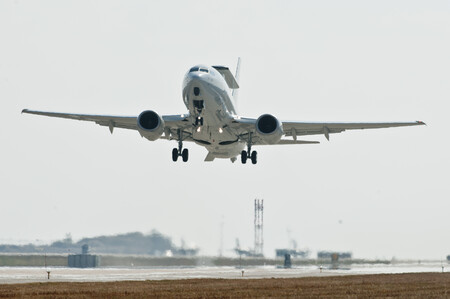
An E-737 Peace Eye in the United States
According to DAPA, the approved budget amounts to 3.87 billion won, about 2,820 million dollars, and contemplates the incorporation of four planes until 2032. The goal is to have permanent patrols capable of monitoring the national airspace without interruption and coordinating the response in case of crisis. Deliver planning up to that horizon will progressively integrate aircraft into the operations of the Air Force.
The industrial component presumably had a relevant weight in the decision. L3Harris has been supplying equipment to the South Korean armed forces, from electro-optical and infrared surveillance systems to secure communications and night vision devices. The company has an authorized service center in the country, which reduces maintenance times and simplifies logistics in case of breakdowns.
The Global 6500 is expected to reinforce the air defense of the Asian country. These devices will be integrated into the grid national Istar, connecting combat sensors and units to generate a complete image of airspace. Its main mission will be to detect intrusions and coordinate the immediate reaction, but its regular use is also contemplated in periods of calm to maintain training and preparation of crews.
Images | L3Harris (1, 2) | United States Air Force