

Demography has become one of the final bosses against which different countries are battling. Countries like China and, above all, Japan and South Korea have become the highest exponents when we talk about a “demographic crisis.” However, there is no need to go to Asia to look at the problem. In Europe, many countries are also facing this crisis, and when policies seem ineffective, it is often private entities that step in, as seen with a hotel chain in Poland .
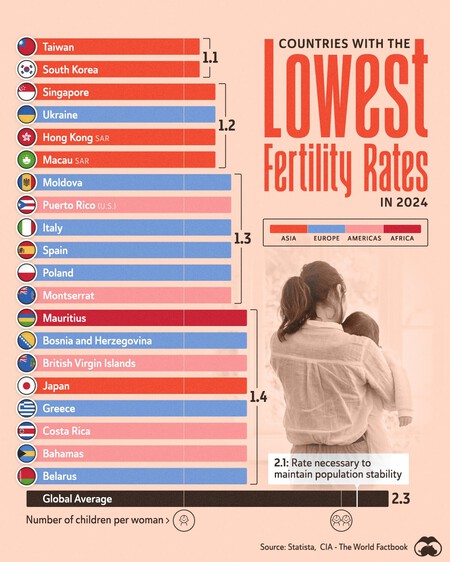
The demographic engine of countries like Spain is stalling because few babies are being born. They are not enough for generational relief . More babies are born to mothers over 40 years old than to those in their 20s, and immigration serves only as a temporary remedy. This situation isn’t isolated to Spain; countries such as Switzerland , the Netherlands , the Nordics , Belgium , and Italy are experiencing similar fertility rates.
Poland is also grappling with this issue, and the owner of a chain of hotels has come up with an innovative idea: starting to reward couples who conceive a baby during their stay in one of her hotels.
Come to My Hotel, Conceive a Baby, And Get a Check
Poland’s fertility rate is at an all-time low, estimated at just 1.3 children per woman in 2023, which is significantly below the approximately 2.1 children needed for generational replacement.
Why is this important? Japan is already living the consequences of a declining population: without enough young people, certain positions remain unfilled, and many elderly individuals are forced to work beyond retirement age, putting immense strain on the welfare state and jeopardizing pensions.
In Poland, the population fell by 123,000 people in 2024, marking the most significant decline among EU countries for the second consecutive year. The Financial Times notes the vicious cycle created by this situation, which even affects the skill levels of doctors assisting in deliveries. With fewer births, there are fewer experiences gained, leading to potential challenges in complicated deliveries.
The Polish government has made efforts to encourage births through initiatives such as the Rodzina 500+ program , which provides monthly subsidies of 800 Zlotys (approximately 188 euros) for each child until they reach adulthood.
In the same report, we hear about Władysław Grocchowski , the owner of the Arche hotel chain, which operates 23 locations across Poland. His idea? To organize a baptism party or secular celebration for ten babies conceived in one of his hotels, along with a 10,000-Zloty check (approximately 2,100 euros). This offer extends to the company’s 2,000 employees as well.
To qualify, interested parents must present a hotel invoice dated roughly nine months before the child’s birth. Grocchowski has stated that, being at the lower end of the European demographic scale, addressing the issue is urgent and serious. However, he also mentions that this initiative serves as both an incentive and a humorous marketing tactic.
Beyond the 2,000 euros or the 188 euros monthly government subsidy, some argue that the real underlying problem is closely linked to a familiar issue: the housing crisis. It’s estimated that Poland has a shortfall of 1.5 to 2 million homes , particularly in large cities where the average cost of a square meter exceeds 1,500 euros .

Up to 16% of Poles spend more than half their salary on housing, and a third cannot afford to buy or rent something that meets their needs. This is particularly problematic for young people. If they struggle to afford housing, they are less likely to contemplate having children or even seeking better job opportunities, ultimately affecting their stability.
The government has promised to invest in creating social housing , but this is a future remedy for an immediate problem. As is often the case, the situation is cyclical: housing instability complicates family planning and discourages the decision to expand families.
This demographic crisis poses a significant challenge not only for Poland but also for many countries worldwide. Addressing these issues will require collaboration between governments, private entities, and the community to foster an environment where families can flourish.