
In Seoul , a pivotal set of agreements was formed highlighting the significant advancements in the field of artificial intelligence (AI). OpenAI, in collaboration with Samsung and SK Group , is pushing forward with their ambitious Stargate project , which aims to achieve an astonishing production rate of 900,000 DRAM wafers per month . This initiative not only seeks to enhance memory production but also explores the establishment of new data centers in South Korea. This announcement was made following a series of high-profile meetings involving Sam Altman, the leaders of these tech giants, and the South Korean President, Lee Jae-Myung .
The gathering at the Seoul presidential office marked a significant moment as Sam Altman engaged in discussions with key figures from the two Asian technological conglomerates, alongside President Lee Jae-Myung . The sentiment was clear: South Korea is intent on solidifying its position as one of the top three global powers in AI, while OpenAI aims to secure its Stargate project in regions enriched with technological resources. This mutual interest is encapsulated in formal agreements that span memory supply, infrastructure, and long-term collaboration.
An Objective That Can Tension the Entire Memory Sector
To understand the magnitude of this agreement, we must first grasp the concept of wafers . These silicon discs form the foundation for chip manufacturing. Each processed wafer produces numerous chips that eventually become DRAM memory modules or HBM batteries , powering servers and data centers.
The ambitious target of 900,000 wafers per month stands in stark contrast to current market statistics. According to Techinsights , global production capacity for 300-millimeter DRAM wafers was approximately 2.07 million per month in 2024, with an anticipated increase to 2.25 million by 2025. Achieving 900,000 , therefore, would account for about 39% of the total market capacity. No single manufacturer has reached such a scale, underscoring the substantial nature of this agreement, which symbolizes OpenAI’s aspirations and the escalating demand for high-performance memory supplies.
This agreement also includes initial commitments for expanding memory production and assessing new infrastructure in South Korea. Companies within the Samsung umbrella, such as Samsung SDS , will be involved in developing data centers, while others like Samsung C&T and Samsung Heavy Industries are set to contribute to their design and construction. The Ministry of Science and ICT is considering locations outside Seoul’s metropolitan area, while SK Telecom has signed an agreement to investigate establishing a center in southwestern South Korea. Furthermore, the integration of ChatGPT Enterprise and API capabilities into corporate operations is also on the table.
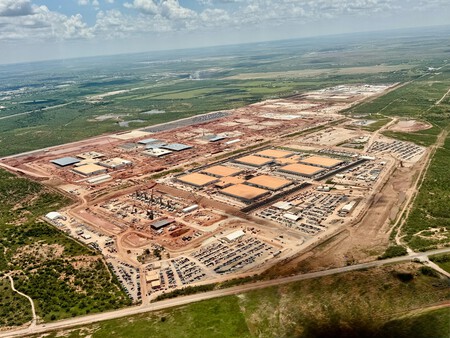
<span>Stargate Data Center in the United States</span>A crucial aspect of this venture lies in the distinction between using and training a model. While interacting with a chatbot activates an inference infrastructure, the training of a new AI system demands thousands of chips to operate in unison, each requiring high-performance memory modules . This exponential need for capacity intensifies the requirements for servers, cooling systems, and electrical power. Thus, guaranteeing hundreds of thousands of wafers monthly seems not just reasonable but a prerequisite for supporting the forthcoming generation of AI models.
OpenAI’s computational capabilities are bolstered through significant partnerships, including alliances with Oracle and Softbank , to establish five data centers with substantial gigawatt capacity. Moreover, Nvidia has pledged investment upwards of 100 billion dollars , providing access to over 10 gigawatts for their training systems.
</div>Understanding OpenAI’s trajectory necessitates recognizing its foundational partnership with Microsoft . Initial investments of 1 billion in 2019, followed by 10 billion later, provided OpenAI access to the Azure cloud , which has been instrumental in developing models such as ChatGPT. However, recent movements indicate a transition toward infrastructure allowing OpenAI greater control, reducing reliance on a singular supplier.
<img alt="The companies of AI tell us that they want to achieve an AGI. What they are really conquering is the economy of attention " width="375" height="142" src="https://i.blogs.es/cb32b9/sam-movil/375_142.jpeg"/>It is important to note that many aspects of these agreements are still in initial phases. Letters of intent and memoranda of understanding illustrate the desire to collaborate, but specific details remain unfinalized. Given the extensive scale of the Stargate initiative, multiple risks loom, from bottlenecks in producing high-performance memory to energy shortages necessary for operating large facilities. These issues, coupled with obtaining required permits and coordinating with various stakeholders, highlight the complexities involved. While the signed agreements chart a promising path, the actual execution remains to be seen.
Images | Sam Altman | Samsung | SK Hynix | Xataka with Grok
In Xataka | I’ve been hooked to Sora 2 for two days: I’m generating absurd memes where I am the protagonist and I can’t stop