
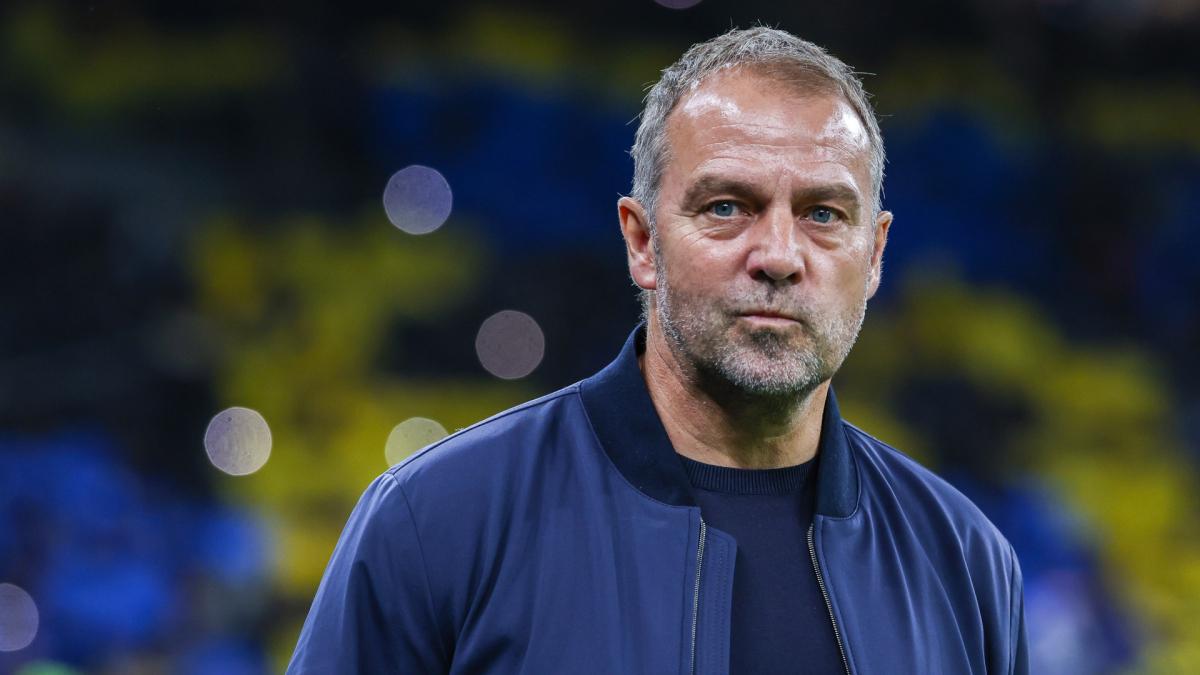
Hansi Flick: A Coach Under Pressure After PSG Defeat
Hansi Flick, the renowned football manager, faced intense scrutiny following his team’s recent defeat against Paris Saint-Germain (PSG) at home. This loss has drawn sharp criticism from the Spanish press, labelling the match a “defeat at the Flick.” Analysts pointed to the spaces left open by his team as factors that led to this disappointing outcome, especially against a formidable opponent like PSG.
Despite the backlash, Flick’s perspective on the match reveals a complex understanding of his team’s performance. He commented firmly on the nuances of the game, emphasizing that performance fluctuations are intrinsic to the sport. Flick stated, “We played much better in the first period than in the second. We have conceded too many goals because of fatigue. PSG is an excellent team; they have very young and fast players, and they made a fantastic match.”
Flick’s assessment candidly highlights a notable concern in modern football—team fatigue. As matches pile up in a congested schedule, players find it increasingly challenging to maintain peak performance. This is particularly true for young talents like Pedri and Frenkie de Jong, who Flick noted have been logging extensive minutes in recent weeks. He indicated that the freshness of these key players could be pivotal in upcoming matches.
The Tactical Battle Between Flick and PSG
Tactically, Flick’s approach draws both admiration and skepticism. His philosophy centers on an attacking style of play, which naturally leaves room for opponents to exploit defensive gaps. Against PSG, an overwhelmingly robust side rich in pace and skill, this strategy was laid bare. Fast counter-attacks from PSG capitalized on these spaces, leading to a devastating scoreline.
The coaching duel between Flick and his PSG counterpart was another focal point of the match. Flick’s expectations of controlling the game were thwarted, primarily by PSG’s ability to maximize transitions. The way Flick’s team often presses high left them vulnerable, which PSG exploits effectively with their quick, incisive players.
This game serves as a crucial lesson in adaptability. Moving forward, Flick must reassess his tactical choices, especially in high-stakes encounters against elite teams like PSG. The match not only exposed weaknesses in his strategy but also illuminated the urgent need for defensive solidity and effective game management throughout the entire match.
The Reaction from Fans and Analysts
In the aftermath of the defeat, reactions poured in from various quarters—fans, pundits, and analysts alike. While many expressed their disappointment, others noted that one loss should not define Flick’s entire tenure. Nevertheless, calls for greater accountability and adjustments to his strategy have surged.
Social media buzzed with fan reactions, illustrating the polarizing nature of Flick’s coaching methods. Some fans are already calling for a tactical overhaul, while others emphasize patience, arguing that building a competitive team necessitates time and gradual improvement.
Moreover, analysts have underscored Flick’s ability to extract potential from younger players. He has cultivated talents who can become future stars. The cautionary sentiment lies in the balance between giving those players minutes to grow and ensuring that fatigue does not lead to underperformance.
Looking Ahead: Future Challenges for Flick
As the season progresses, Hansi Flick’s focus will need to shift toward meticulous planning. Upcoming fixtures must prioritize not only winning but also maintaining player health and stamina. The implications of fatigue extend beyond tactical losses; they threaten player development and morale.
Flick’s challenge is to instill a working philosophy that incorporates deeper defensive structure without compromising his team’s attacking flair. Moreover, the coach must navigate a hefty schedule, managing player rotations to ensure they remain competitive.
The defeat against PSG serves as a crucial turning point for Flick. How he responds in the next few weeks—both tactically and psychologically—will be instrumental in determining the trajectory of his team for the remainder of the season. Flick’s journey as a tactician is far from over; instead, it presents a fresh canvas for growth and evolution as a football manager.
In conclusion, the recent match against PSG has illuminated both the strengths and weaknesses within Hansi Flick’s coaching strategy. By addressing the pressing issues highlighted from this encounter, he has an opportunity to evolve, adapt, and ultimately lead his team towards a promising future. The resilience and execution of his plans will be key as the road ahead becomes more challenging.